
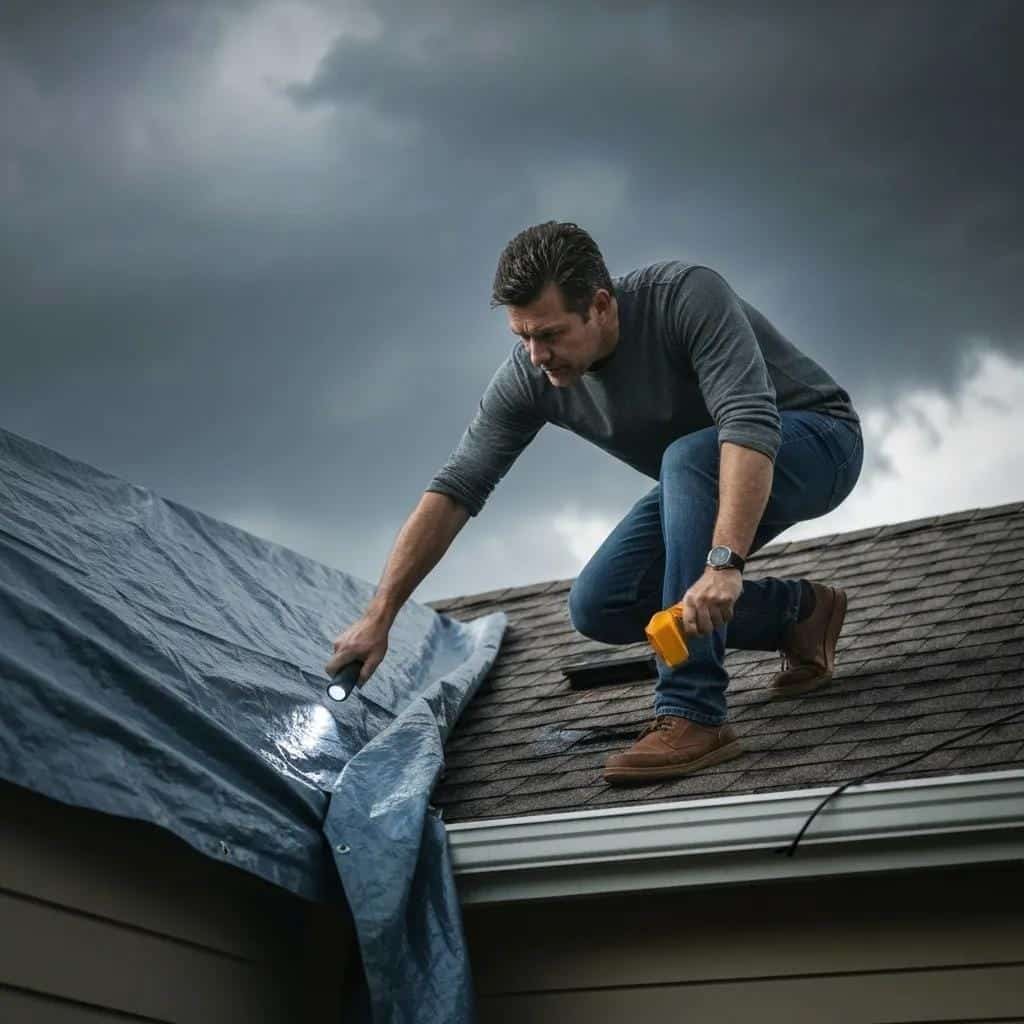
Emergency Roof Repair: Quick Fixes to Stop Damage Fast
When a sudden leak or storm breach threatens your attic and living space, time matters. An untreated roof leak can cause thousands of dollars in interior damage in a single day. This guide covers emergency roof repair techniques that stabilize the situation until permanent repairs can be made — plus the safety precautions that keep you from becoming part of the problem.
Temporary Leak Repair: What Actually Works
Temporary repairs create a barrier against water intrusion while you arrange permanent work. The right combination of diagnostics, materials, and safe execution can hold back most leaks long enough to schedule a proper fix.
Finding the Leak Source
Water travels along decking and rafters before dripping, so the leak’s entry point isn’t always directly above where water shows up inside. To find the source:
- Place a clean bucket where water is dripping to confirm it’s active.
- Have someone spray the roof with a garden hose in sections, starting from the lowest point and working up.
- Watch inside the attic for the first point of water penetration — typically along seams, around flashing, or at penetrations like pipe boots or skylights.
Pinpointing the origin saves materials and ensures the temporary fix actually stops the leak.
Essential Materials
A basic emergency kit includes:
- Roofing cement — seals small cracks and gaps in minutes
- Heavy-duty tarp — covers larger breach areas
- Marine-grade plywood — rigid backing for tarps or hole patches
- Galvanized nails — corrosion-resistant fastening
- Butyl rubber tape — conforms to irregular flashing surfaces
Each material has a specific role. Together they let you patch anything from a pinhole to a major breach.
DIY Patch for Small Leaks
For a small, localized leak:
- Clear debris and thoroughly dry the area around the leak.
- Apply roofing cement directly into the crack or hole, smoothing it with a putty knife.
- Press a patch of roofing membrane or a piece of shingle into the wet cement.
- Seal the edges of the patch with another layer of cement, tapering edges so water doesn’t pool.
- Check from inside the attic after the next rain to confirm the leak is contained.
Done correctly, this buys you weeks or months of dry house until permanent repairs happen.
Safety First
Roof work is dangerous. Before ascending:
- Wear a safety harness tied to a secure anchor point
- Use slip-resistant footwear and keep tools tethered
- Check the forecast — never work in rain, snow, or high wind
- Shut off power to any attic lights near the work area
If conditions aren’t safe, don’t go up. An interior bucket-and-tarp solution is better than a trip to the ER.
When DIY Isn’t Enough
Call a professional immediately if you see:
- Water infiltration over a wide area or multiple drips across rafters
- Soft or sagging decking underfoot
- Visible damage to ridge vents, chimney flashing, or multiple missing shingles
- Ice dams that keep reforming despite heat cables or de-icing
These indicate systemic issues that need trained eyes and proper equipment.
Fast Storm Damage Repair
Post-storm repairs focus on stabilizing compromised areas and stopping interior water penetration until full restoration.
Assessing the Damage
Start from the ground. Scan for missing or detached shingles, dented metal components, and displaced flashing. Look at gutters and downspouts for granule accumulation — that’s shingle material, and a lot of it means shingle damage above. Check the attic (if safe) for daylight streaks, water stains, or pooling moisture.
Emergency Tarping
For large breaches, tarping is the standard emergency fix:
- Lay the tarp over the damaged area, extending at least three feet beyond the leak edges on all sides.
- Position wood battens perpendicular to the roof slope to sandwich the tarp and distribute wind loads.
- Secure battens with galvanized nails every 12 inches through the tarp and into the deck sheathing.
- Tie tarp corners to strong anchor points — chimney flanges, ridge vents — to resist wind uplift.
A properly installed tarp holds for 4 to 6 weeks, depending on weather and sun exposure.
Securing Loose Shingles
For partially detached shingles:
- Nail down lifted shingles through the existing nail line
- Slide replacement shingles under intact rows and nail above the cutout line
- Seal edges with roofing cement to prevent wind-driven water from getting under the shingle
Board-Up for Major Openings
For holes or major breaches around vents, skylights, or similar penetrations:
- Cut plywood panels to fully cover the opening
- Attach 2×4 lumber around the perimeter for nailing support
- Secure panels flush to the deck with corrosion-resistant screws
This blocks wildlife, debris, and water until permanent repairs can be made.
Common Emergencies and Quick Fixes
Ice Dams
Ice dams form when heat escapes through the roof, melting snow at the ridge and refreezing it at the cold eaves. Emergency response:
- Use a roof rake to remove snow from the ridge down toward the eave — from the ground, never the roof
- Apply calcium chloride packs inside a fabric tube across the ice dam to melt drainage channels
- Never chip at ice — you’ll damage shingles and make the problem worse
Long-term prevention means better attic insulation, air sealing, and ventilation.
Skylight and Vent Leaks
Leaks at penetrations usually mean compromised flashing seals:
- Remove old sealant from around flashing edges
- Apply butyl rubber tape under the flashing flange
- Re-caulk the perimeter with high-performance roofing sealant
This reestablishes a watertight seal until full flashing replacement.
Flat Roof Leaks
For flat roof membrane leaks:
- Clean and dry the damaged area
- Cut a membrane patch three inches larger than the leak
- Adhere the patch with cold-applied adhesive, pressing out air pockets
- Place a weighted board or sandbag on the patch until the adhesive cures
Shingles Blown Off in High Wind
When shingles blow off, decking and underlayment are exposed:
- Lift adjacent shingles and apply roofing cement under the tabs
- Press a replacement shingle into the cement and nail it above the cutout line
- Seal nail heads with roof sealant
Quick action prevents water from reaching the deck.
Clogged Gutters During Heavy Rain
Clogged gutters cause water to back up under roof edges, leading to leaks and fascia damage. If you can safely clear them during or immediately after a storm, do so. If the gutters are overflowing but inaccessible, prioritize getting water to drain away from the foundation and plan a professional cleanup.
When to Call a Pro
Call immediately if you see:
- Rotting or sagging roof deck in multiple areas
- Creased or split flashing around chimneys and vents
- Persistent leaks during moderate rainfall
- Water staining on interior beams or signs of mold growth
These indicate systemic failures. Temporary fixes won’t cut it.
How Falcon Roofing Helps in Emergencies
Falcon Roofing provides 24/7 emergency response for Traverse City and Northern Michigan. Our certified crews use winter-rated materials suited for heavy snow and freezing temperatures, and we follow Michigan building codes for both temporary and permanent restoration work.
We also coordinate with insurance adjusters, document damage with photos and reports, and help you navigate claims under wind, hail, and additional living expense endorsements. That way you get fair coverage for both emergency and permanent work.
Preparing for Emergencies Before They Happen
The best emergency repair is the one you don’t need. Preparation reduces the odds of a crisis:
- Clear valleys and gutters before storm season
- Tighten loose shingles during routine maintenance
- Stock a basic emergency kit — sealants, tarps, tools, flashlights
- Maintain attic insulation and ventilation to reduce ice dam risk
Permanent Fixes Follow Emergencies
Temporary repairs buy time. They don’t replace permanent solutions. As soon as the immediate crisis is handled, schedule a full inspection and lasting repair with a licensed roofer. In Traverse City, that’s us. Call Falcon Roofing for emergency response or a free estimate for permanent restoration.
Have questions about your roof?
We're happy to help. Give us a call or request a free estimate online.