
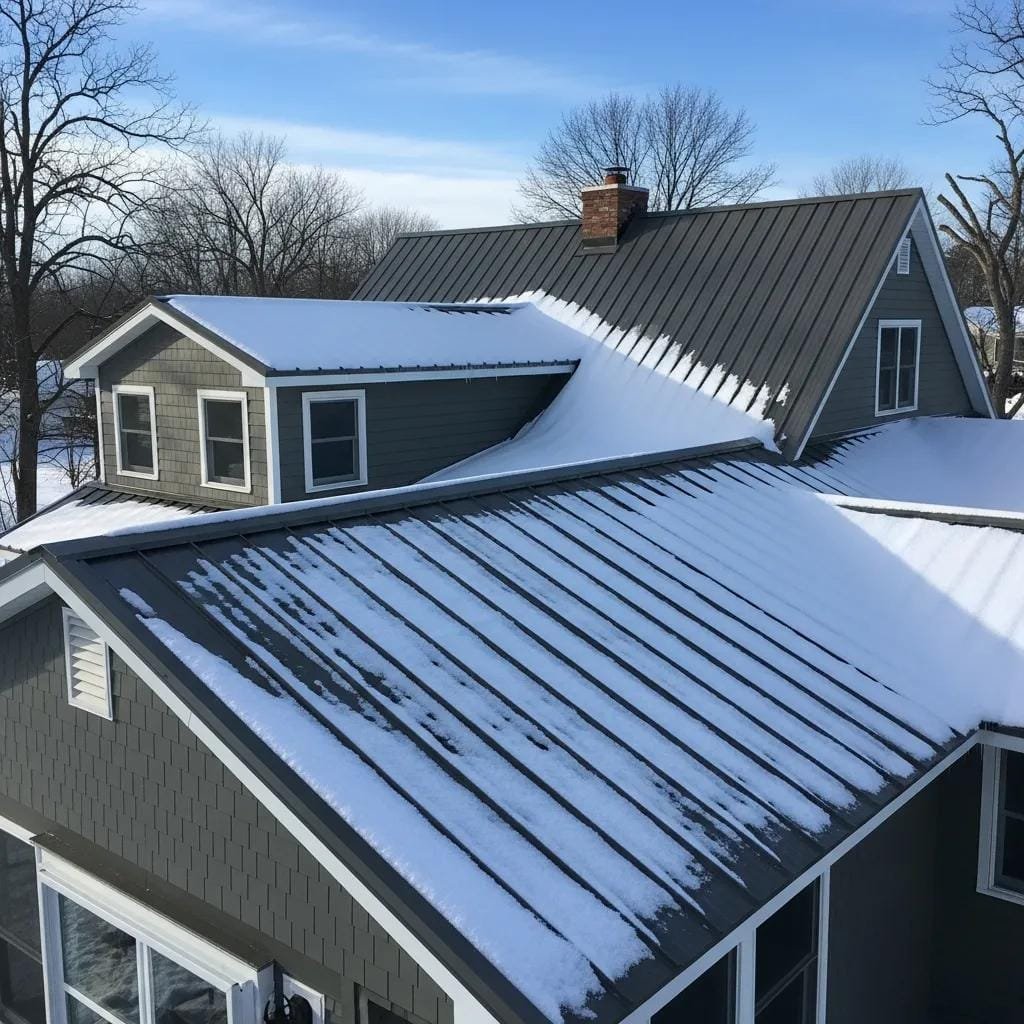
Ice Dam Prevention: Tips for Northern Michigan Homes
If you’ve lived through a Northern Michigan winter, you’ve probably seen an ice dam — that thick ridge of ice that forms along the eave of a roof, with icicles hanging off the gutter edge. They look picturesque. They’re also one of the most expensive problems a homeowner can ignore.
Ice dams don’t just damage gutters. They force meltwater back up under shingles, into the attic, through ceilings, and down walls. By the time you see a stain on the drywall, the damage behind it is often worse than what’s visible. We see it every spring.
Here’s how ice dams form, and what you can actually do to stop them on a home in Traverse City, Petoskey, Cadillac, or anywhere else in Northern Michigan.
What Ice Dams Are and Why They Matter
An ice dam is a ridge of ice that forms at the edge of a roof and prevents melting snow from draining off. When that water pools behind the dam, it has nowhere to go — so it works its way under shingles and into the structure.
The damage adds up fast:
- Water seeping into insulation, drywall, and ceilings
- Mold and mildew growth inside wall cavities
- Wood rot in roof decking, fascia, and rafters
- Warped or detached gutters pulled down by ice weight
- Stained ceilings and peeling paint on interior walls
The repair bill for a single bad ice dam event can easily run into the tens of thousands of dollars. A little prevention is cheap by comparison.
Why Ice Dams Form
The root cause is almost always heat loss through the roof. Here’s the sequence:
- Snow accumulates on the roof.
- Warm air from the living space leaks into the attic.
- The attic warms the roof deck from below, melting the bottom layer of snow.
- Meltwater flows down the roof toward the eaves.
- The eaves overhang the exterior wall and stay cold.
- Water refreezes at the cold eaves, building up into a dam.
- New meltwater pools behind the dam and backs up under the shingles.
The primary factor in eliminating ice dams is keeping the surface of the roof uniformly cold. That’s why the real fix isn’t about the ice itself — it’s about what’s happening in your attic.
Long-Term Prevention Strategies
Proper Attic Insulation and Ventilation
This is where most homes fail. An attic that’s well-insulated and well-ventilated stays close to outdoor temperature, which means the snow on the roof doesn’t melt from underneath.
- Insulation: Minimum R-30 is code in most of Michigan, but we recommend R-38 or higher for Northern Michigan. More is better.
- Ventilation: Ridge vents and soffit vents need to work together to move air from the eaves up through the ridge. Baffles keep the airflow path clear of insulation.
- Air sealing: Recessed lights, attic hatches, plumbing stacks, and electrical penetrations are all places where warm air leaks into the attic. Sealing them matters as much as insulating.
Ice and Water Shield
At installation, we install a self-adhering ice and water shield membrane along the full eave line, extending at least 3 feet up the roof from the exterior wall (more for steeper pitches). This membrane creates a waterproof barrier that prevents meltwater from reaching the deck even if an ice dam forms.
Older homes often have no ice and water shield at all, or only a narrow strip at the eave. If your roof is being replaced, make sure the new installation includes proper ice and water shield coverage.
Gutter Maintenance
Clogged gutters make ice dams worse. When water can’t flow away freely in the fall, it pools and freezes at the transition from the roof to the gutter, creating an anchor point for the dam to grow from. Clean gutters in late fall, and again in spring.
Roof Rakes for Snow Management
After heavy snowfalls, a roof rake can remove the first three to four feet of snow from the edge of the roof — the area most prone to ice dam formation. This is a maintenance tool, not a permanent fix, but it buys time while you’re addressing the underlying insulation and ventilation issues.
Never use a roof rake on a metal roof, and never climb on a snow-covered roof. A rake from the ground is the only safe option for most homeowners.
Heated Roof Cables
As a secondary measure, heated cables installed along the eaves can prevent ice dam formation in problem areas. They’re typically laid in a zigzag pattern and activated when temperatures drop. We install these where passive prevention isn’t enough — usually on complex roof lines with cold valleys or shaded north slopes.
Counter Measures for Active Ice Dams
If you already have an ice dam forming and water is coming into the house, here’s what to do:
- Use a box fan in the attic pointing toward the area where the leak is occurring. Cold air stops the meltwater and often slows or stops the leak within hours.
- Calcium chloride in a cloth tube (like an old pantyhose leg) laid across the dam can melt a drainage channel. Avoid rock salt — it damages shingles and metal flashing.
- Never chip at the ice with tools. You’ll damage the shingles underneath, making the problem worse and voiding any remaining warranty.
If you have active interior leaking from an ice dam, call a professional. Emergency tarping and ice dam steam removal are both services we provide year-round.
When to Call a Roofer
Call a professional for:
- Ice dam removal (especially with a steamer — it doesn’t damage the roof)
- Attic inspections to identify air leaks and insulation gaps
- Ice and water shield installation or upgrades
- Full roof inspections before winter
- Replacement if your current roof wasn’t built to handle Northern Michigan conditions
If you’re dealing with ice dam problems every winter, the solution isn’t another round of chipping or calcium chloride. It’s addressing what’s happening in your attic and making sure your roof system is built for the climate you actually live in.
We’ve been doing this in Northern Michigan for over 20 years. If you want an honest look at your roof and attic before the next cold snap, give us a call.
Have questions about your roof?
We're happy to help. Give us a call or request a free estimate online.