
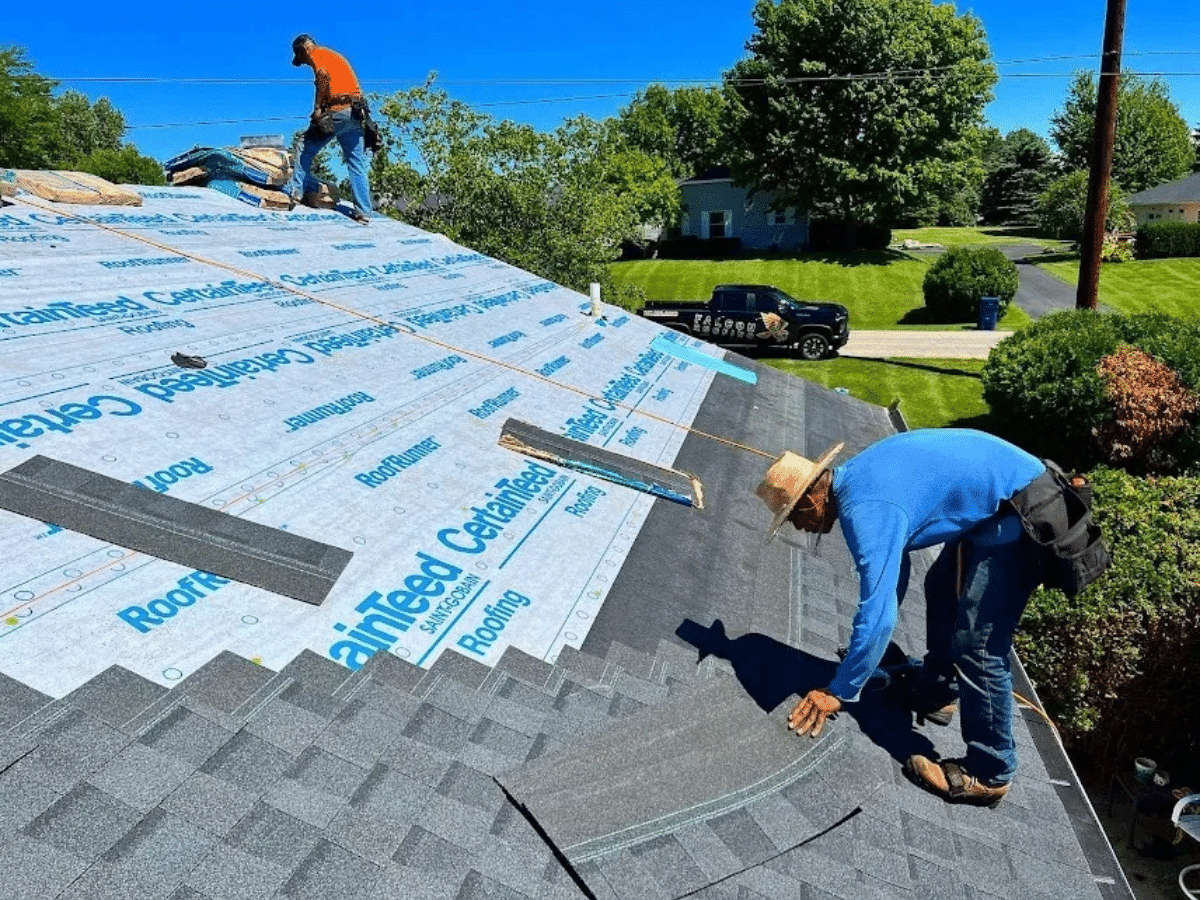
Local vs. National Roofing Companies: Which Should You Choose?
When it’s time to replace or repair a roof, one of the first choices is whether to hire a local roofer or a national chain. Both have their strengths. The right answer depends on what you’re trying to accomplish, what your roof needs, and how the contractor fits your situation.
Here’s how local and national roofing companies compare, and what to consider when making the call.
What Makes Local Roofing Companies Stand Out
Local climate expertise
A local roofer in Traverse City understands what Northern Michigan actually does to roofs. Heavy lake-effect snow, freezing rain, ice dams, wind off Grand Traverse Bay, and the freeze-thaw cycles that tear apart subpar installations. A local contractor has seen all of it, and they build roofs accordingly.
A national chain may not know — or even believe — that your eaves need full ice and water shield coverage, or that a certain shingle profile peels off in our wind conditions. Regional expertise is hard to replicate from a corporate training manual.
Personalized service
Local companies prioritize relationships over volume. They take on the jobs they can actually handle well, and their reputation rides on every roof they install. Community reviews and word of mouth are their primary marketing. That tends to translate into better communication, clearer expectations, and more one-on-one attention.
Community commitment
Local contractors live in the community they serve. They sponsor local teams, employ local crews, and show up at the same grocery stores and gas stations as their customers. That investment in a positive reputation is real — and it shapes how they do business.
Faster response times
Emergency roofing calls get handled faster by local companies. During storm season, that matters. A local roofer can often be on your property within hours for an emergency tarp or damage assessment. A national outfit may route you through a call center and dispatch a crew from three counties away.
What National Roofing Companies Offer
Broader resources
National firms often have access to advanced training programs, industrial equipment, and large material inventories. For certain specialty projects, that scale is useful.
Scalability
If you’re managing multi-state commercial properties, a national company that operates consistently across regions makes coordination easier.
Consistency
National chains operate under standardized procedures, which means predictable service quality across locations — at least in theory.
Longer warranties
National chains sometimes offer more detailed or longer guarantees than local providers, though local companies backed by manufacturer certifications (like GAF Master Elite or CertainTeed SELECT ShingleMaster) can offer equivalent or better protection.
The Drawbacks of Each
Local company limitations
- Scheduling pressure during peak season — smaller crews mean longer wait times in spring and early summer when demand is high
- Fewer specialty resources — if your project requires uncommon materials or specialized equipment, local options may be limited
- Geographic scope — a local roofer won’t help you with a property two states away
National company drawbacks
- Impersonal service — large operations sometimes sacrifice personalized attention for streamlined processes
- Subcontracted work — many national chains use local subcontractors, which creates quality variability and complicates accountability
- Delayed response — remote areas often wait longer for scheduling and emergency service
How to Choose the Right Contractor
Match the contractor to the project
- Residential repair or replacement in Northern Michigan — local almost always wins. Regional expertise matters more than anything else.
- Single commercial property — local, with preference for a company that has commercial certifications.
- Multi-state portfolio — national may fit better, especially if standardization across locations matters.
Check reviews and credentials
Look at recent Google reviews, not just testimonials on the company’s own website. Verify the contractor is licensed and insured in Michigan. Ask for proof of general liability and workers’ compensation coverage.
Ask about warranties
Compare warranty terms carefully. Manufacturer warranties on materials are one thing; workmanship warranties from the installer are separate. Make sure you understand both, and that the contractor will still be in business when a claim comes up.
Get multiple quotes
Always get at least three estimates. Fair pricing and timeline expectations become clear when you have comparisons. Be skeptical of bids that are dramatically lower than the rest — they usually cut corners somewhere.
Why Falcon Roofing
Falcon Roofing has been serving Traverse City and Northern Michigan for over 20 years. We live here, we work here, and every roof we install gets built for this specific climate — not a generic national spec.
- Local crews with deep regional expertise
- Free estimates with clear, itemized pricing
- Manufacturer certifications (GAF, CertainTeed, Owens Corning)
- Workmanship warranties backed by an actual local office you can find
Finding the Right Fit
The choice between local and national depends on your priorities. Local roofers offer tailored service, quick responses, and climate expertise. National companies suit broader, multi-location projects where standardization across regions matters.
For homeowners and businesses in Traverse City, local almost always wins. And when you need a local roofer who’ll be here to stand behind the work for decades, Falcon Roofing is the trusted choice.
Have questions about your roof?
We're happy to help. Give us a call or request a free estimate online.