Metal Roofing Material Types: How to Choose the Right One
Metal roofing has exploded in popularity over the last decade, and for good reason. A properly installed metal roof can last 40 to 70 years, sometimes over 100 for copper and zinc, while handling snow, wind, and ice better than almost any other material. But “metal roofing” covers a lot of ground. The right choice depends on the material, the panel profile, your budget, and what you’re trying to accomplish.
Here’s what you need to know to make a good decision.
Metal Roofing Panel Profiles
Standing Seam
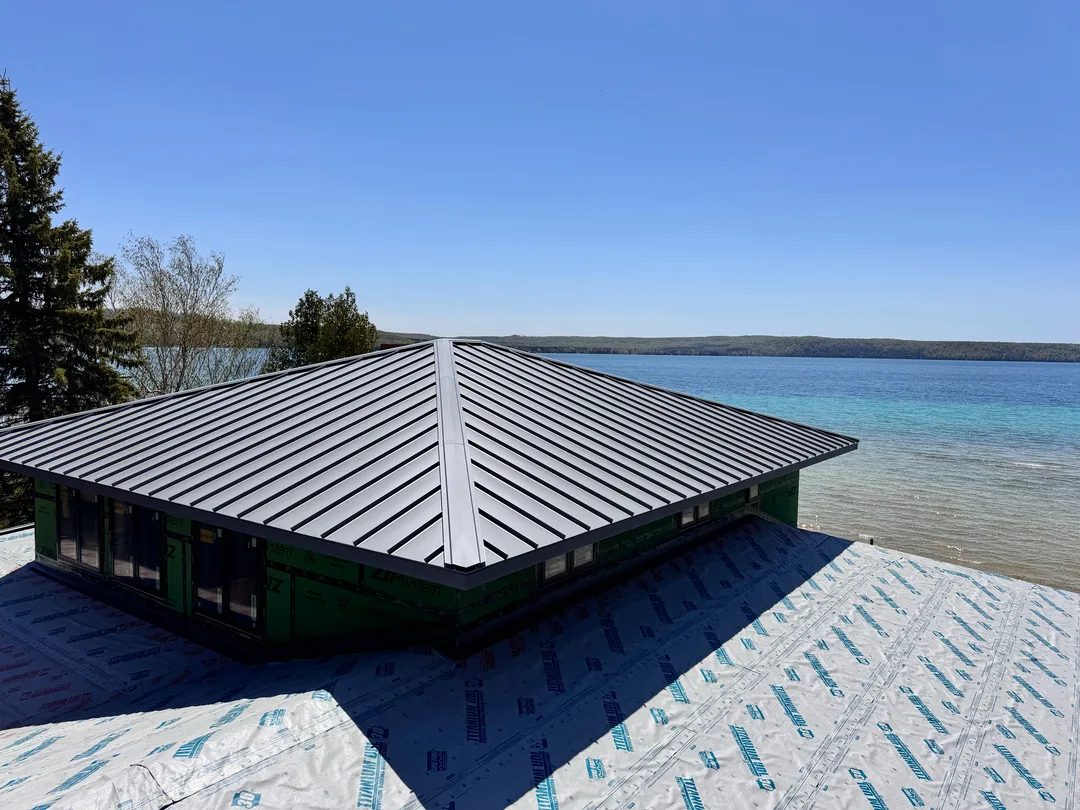
Standing seam is the premium option, and it’s what we install on most residential projects in Northern Michigan. Panels run vertically from ridge to eave with raised seams where they interlock, and all fasteners are hidden under the seams.
Why standing seam works well here:
- Concealed fasteners eliminate potential leak points, there are no screws exposed to weather
- Raised seams channel water and melting snow away efficiently
- Panels float on clips that allow thermal expansion and contraction without stress
- Smooth, uninterrupted surfaces make excellent platforms for reflective coatings
Standing seam metal roofs often endure 40 to 70 years, with the hidden-fastener design requiring significantly less maintenance than other metal panel types. If you’re staying in the house long-term, it’s the option we steer most customers toward.
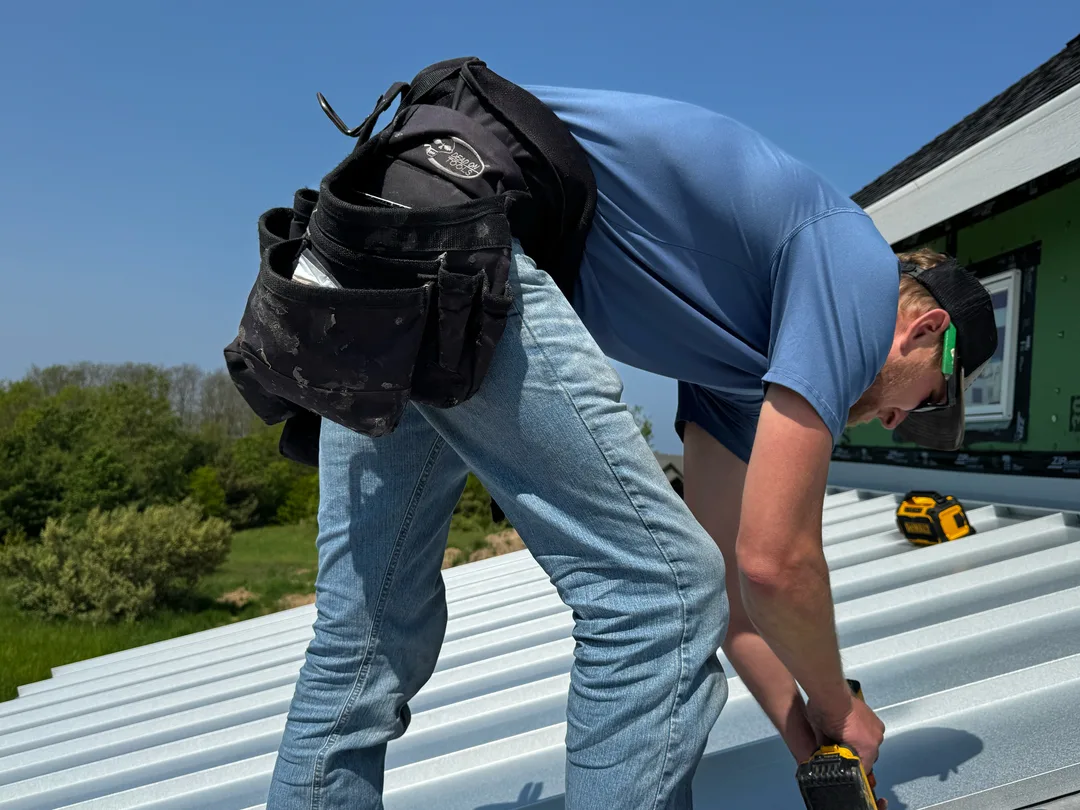 Installing corrugated metal panels on a Northern Michigan build.
Corrugated Metal
Corrugated metal uses steel or aluminum sheets formed with alternating ridges and valleys. The ribbed profile adds structural strength relative to weight, making it a practical choice for pole barns, agricultural buildings, and homes with a more rustic aesthetic.
| Profile Type | Structural Strength | Common Applications |
|---|---|---|
| Corrugated Steel | High | Farms, industrial buildings |
| Corrugated Aluminum | Moderate | Coastal or waterfront properties |
| Galvalume Steel | Very High | Commercial properties |
Corrugated panels are more affordable than standing seam and install faster. The trade-off is exposed fasteners, which will eventually need gasket replacement, typically around 15 to 20 years.
Metal Shingles
Metal shingles are stamped panels designed to mimic the look of asphalt shingles, wood shakes, or slate. You get the longevity of metal with a more traditional appearance, which matters for homes where standing seam would look out of place architecturally.
Benefits of metal shingles:
- Traditional appearance with metal durability
- Interlocking panel design prevents water intrusion and reduces noise
- Lightweight construction reduces structural load on older buildings
The installation is more labor-intensive than standing seam, which can affect cost. But for homes where you want metal’s performance without changing the visual character, they’re a strong option.
Metal Roofing Materials
The panel profile tells you the shape. The material tells you almost everything else, lifespan, corrosion resistance, weight, and cost.
| Material | Corrosion Resistance | Weight per Sq Ft | Estimated Lifespan |
|---|---|---|---|
| Steel | Moderate (galvanized / Galvalume) | 1.2 lbs | 40–70 years |
| Aluminum | High (natural oxide layer) | 0.5 lbs | 30–50 years |
| Copper | Exceptional (protective patina) | 1.1 lbs | 70–100+ years |
| Zinc | Very High (self-healing surface) | 0.7 lbs | 80–100+ years |
Steel
Steel is the workhorse of metal roofing. Most residential and commercial metal roofs we install are coated steel, either galvanized (zinc coating) or Galvalume (zinc plus aluminum coating). Galvalume has better long-term corrosion resistance and is the standard we use on most projects.
Steel panels come with Kynar 500 or similar PVDF paint finishes that resist fading, chalking, and corrosion for decades. Colors run from traditional charcoal, black, and dark bronze through greens, reds, and custom shades.
Aluminum
Aluminum is the go-to choice for waterfront properties where salt exposure is a concern. It develops a natural oxide layer that resists corrosion without any coating at all, and it weighs less than half what steel does, which matters on older homes where roof weight is a structural consideration.
The trade-off is that aluminum is softer than steel. It’s more prone to dents from hail or falling branches, though impact-resistant grades are available.
Copper
Copper is the high-end option. It develops a beautiful green patina over time, it lasts over a century if installed correctly, and it’s essentially maintenance-free. We install copper primarily on accent work, bay window roofs, dormers, cupolas, and similar architectural features, because the material cost for a full copper roof is significant ($25 to $40 per square foot installed).
Zinc
Zinc is relatively uncommon in residential use but worth knowing about. It develops a protective oxide layer that’s self-healing, minor scratches seal themselves over time. Lifespan is similar to copper (80 to 100+ years) at a slightly lower cost.
Durability, Lifespan, and Weather Resistance
Metal roofing’s biggest advantage is how long it lasts.
- Copper and zinc roofs routinely exceed 100-year lifespans with self-healing patinas.
- Galvalume steel delivers 40 to 70 years with superior rust prevention from its combined zinc and aluminum coatings.
- Aluminum lasts 30 to 50 years and excels in coastal or salt-exposed environments.
- Asphalt shingles, by comparison, typically last 20 to 30 years, sometimes less in Northern Michigan’s climate. We dig into that head-to-head in our guide on metal vs. asphalt roof lifespan.
Fire, Wind, and Hail Resistance
- Class A fire ratings are standard for most metal roofing systems.
- Standing seam panels can withstand winds exceeding 140 mph thanks to concealed fastening.
- Steel and aluminum resist hail dents well, especially with impact-resistant underlayments.
These ratings often translate to insurance premium discounts, something worth asking your agent about when you’re comparing materials.
Maintenance
Metal roofs are low-maintenance, but not zero-maintenance.
- Clear gutters and downspouts to prevent water backup at the eaves.
- Inspect seams, flashing, and sealants annually.
- Address scratches on painted surfaces promptly with matching touch-up paint.
Exposed-fastener systems also need periodic gasket inspection and replacement, typically every 15 to 20 years.
Cost Comparison
Metal roofing costs more upfront than asphalt shingles. The math works out in metal’s favor over time, but you need to plan for the higher initial investment.
| Material | Installed Cost per Sq Ft | Expected Service Life |
|---|---|---|
| Steel | $7–$12 | 40–70 years |
| Aluminum | $9–$14 | 30–50 years |
| Copper | $25–$40 | 70–100+ years |
| Zinc | $20–$30 | 80–100+ years |
For comparison, asphalt shingles run $3 to $9 per square foot installed. Over a 60-year ownership horizon, you’d likely replace an asphalt roof two or three times while a steel metal roof still has decades of life left, which is why the long-term math favors metal for homeowners planning to stay put. Our Traverse City roof cost guide puts those numbers next to local installed prices.
Energy Efficiency Savings
Reflective coatings on metal roofs can reduce cooling costs by up to 40 percent in warmer climates. In Northern Michigan the cooling savings are more modest, but insulated metal panels (IMPs) used on commercial buildings deliver real heating savings as well.
Pros and Cons Summary
Benefits of Metal Roofing
- Exceptional longevity means fewer replacements
- High reflectivity lowers cooling costs
- Lightweight panels often eliminate structural reinforcement needs
- Wide color and profile selections enhance curb appeal
- Fire, wind, and hail ratings typically qualify for insurance discounts
Drawbacks and Limitations
- Higher initial investment than asphalt shingles
- Installation requires specialized skills and experienced contractors
- Improper insulation allows rain noise to carry through
- Periodic coating touch-ups may be needed in harsh environments
How to Choose the Right Metal Roof for Your Home
The decision comes down to four questions:
- Climate and exposure. Are you dealing with heavy snow, high winds, salt air, hail? That shapes which material and profile perform best.
- Architectural fit. Does your home want the clean look of standing seam, the traditional feel of metal shingles, or the utility of corrugated panels?
- Budget and timeline. How long are you staying, and how much can you invest upfront?
- Performance priorities. Is longevity, energy efficiency, or appearance most important?
In Northern Michigan, we usually land on either Galvalume standing seam for residential projects or exposed-fastener metal for outbuildings and commercial applications. But every house is different, and the right answer depends on what you’re trying to accomplish.
Commercial Metal Roofing Options
Commercial buildings have their own considerations:
- R-panels offer cost-effective coverage with through-fastened designs for warehouses and industrial buildings.
- Standing seam provides maximum weather resistance for retail, office, and hospitality buildings.
- Insulated metal panels (IMPs) combine structural support with thermal performance, reducing utility costs.
We’ve installed commercial metal roofs on wineries on Old Mission and Leelanau Peninsulas, warehouses in the Garfield Township corridor, retail and restaurant buildings in downtown Traverse City, and agricultural buildings across our service area.
Bottom Line
Metal roofing delivers unparalleled longevity, energy efficiency, and design flexibility. For homes and businesses in Northern Michigan, it’s hard to beat once you understand the options. If you’re still weighing metal against asphalt or a flat section, our guide to the best roofing materials for Northern Michigan puts all three next to each other. Comparing profiles and materials, steel, aluminum, copper, and zinc, lets you align performance with your budget and climate.
If you’re considering metal for a residential metal roofing or commercial project, we’d be glad to walk you through the options based on your specific property. After two decades of installing metal roofs up here, we’ve got a good sense of what works.
title: “Metal Roofing Material Types: How to Choose the Right One” description: “Compare metal roofing materials, steel, aluminum, copper, and zinc, along with panel profiles like standing seam and corrugated. What to choose for Northern Michigan homes and businesses.” date: 2025-09-05 image: “/images/blog/standing-seam-metal-roof-lakeside.webp” imageAlt: “A standing seam metal roof on a building overlooking a Northern Michigan bay.” author: “Seth Harris”
Metal roofing has exploded in popularity over the last decade, and for good reason. A properly installed metal roof can last 40 to 70 years, sometimes over 100 for copper and zinc, while handling snow, wind, and ice better than almost any other material. But “metal roofing” covers a lot of ground. The right choice depends on the material, the panel profile, your budget, and what you’re trying to accomplish.
Here’s what you need to know to make a good decision.
Metal Roofing Panel Profiles
Standing Seam
Standing seam is the premium option, and it’s what we install on most residential projects in Northern Michigan. Panels run vertically from ridge to eave with raised seams where they interlock, and all fasteners are hidden under the seams.
Why standing seam works well here:
- Concealed fasteners eliminate potential leak points, there are no screws exposed to weather
- Raised seams channel water and melting snow away efficiently
- Panels float on clips that allow thermal expansion and contraction without stress
- Smooth, uninterrupted surfaces make excellent platforms for reflective coatings
Standing seam metal roofs often endure 40 to 70 years, with the hidden-fastener design requiring significantly less maintenance than other metal panel types. If you’re staying in the house long-term, it’s the option we steer most customers toward.
Installing corrugated metal panels on a Northern Michigan build.
Corrugated Metal
Corrugated metal uses steel or aluminum sheets formed with alternating ridges and valleys. The ribbed profile adds structural strength relative to weight, making it a practical choice for pole barns, agricultural buildings, and homes with a more rustic aesthetic.
| Profile Type | Structural Strength | Common Applications |
|---|---|---|
| Corrugated Steel | High | Farms, industrial buildings |
| Corrugated Aluminum | Moderate | Coastal or waterfront properties |
| Galvalume Steel | Very High | Commercial properties |
Corrugated panels are more affordable than standing seam and install faster. The trade-off is exposed fasteners, which will eventually need gasket replacement, typically around 15 to 20 years.
Metal Shingles
Metal shingles are stamped panels designed to mimic the look of asphalt shingles, wood shakes, or slate. You get the longevity of metal with a more traditional appearance, which matters for homes where standing seam would look out of place architecturally.
Benefits of metal shingles:
- Traditional appearance with metal durability
- Interlocking panel design prevents water intrusion and reduces noise
- Lightweight construction reduces structural load on older buildings
The installation is more labor-intensive than standing seam, which can affect cost. But for homes where you want metal’s performance without changing the visual character, they’re a strong option.
Metal Roofing Materials
The panel profile tells you the shape. The material tells you almost everything else, lifespan, corrosion resistance, weight, and cost.
| Material | Corrosion Resistance | Weight per Sq Ft | Estimated Lifespan |
|---|---|---|---|
| Steel | Moderate (galvanized / Galvalume) | 1.2 lbs | 40–70 years |
| Aluminum | High (natural oxide layer) | 0.5 lbs | 30–50 years |
| Copper | Exceptional (protective patina) | 1.1 lbs | 70–100+ years |
| Zinc | Very High (self-healing surface) | 0.7 lbs | 80–100+ years |
Steel
Steel is the workhorse of metal roofing. Most residential and commercial metal roofs we install are coated steel, either galvanized (zinc coating) or Galvalume (zinc plus aluminum coating). Galvalume has better long-term corrosion resistance and is the standard we use on most projects.
Steel panels come with Kynar 500 or similar PVDF paint finishes that resist fading, chalking, and corrosion for decades. Colors run from traditional charcoal, black, and dark bronze through greens, reds, and custom shades.
Aluminum
Aluminum is the go-to choice for waterfront properties where salt exposure is a concern. It develops a natural oxide layer that resists corrosion without any coating at all, and it weighs less than half what steel does, which matters on older homes where roof weight is a structural consideration.
The trade-off is that aluminum is softer than steel. It’s more prone to dents from hail or falling branches, though impact-resistant grades are available.
Copper
Copper is the high-end option. It develops a beautiful green patina over time, it lasts over a century if installed correctly, and it’s essentially maintenance-free. We install copper primarily on accent work, bay window roofs, dormers, cupolas, and similar architectural features, because the material cost for a full copper roof is significant ($25 to $40 per square foot installed).
Zinc
Zinc is relatively uncommon in residential use but worth knowing about. It develops a protective oxide layer that’s self-healing, minor scratches seal themselves over time. Lifespan is similar to copper (80 to 100+ years) at a slightly lower cost.
Durability, Lifespan, and Weather Resistance
Metal roofing’s biggest advantage is how long it lasts.
- Copper and zinc roofs routinely exceed 100-year lifespans with self-healing patinas.
- Galvalume steel delivers 40 to 70 years with superior rust prevention from its combined zinc and aluminum coatings.
- Aluminum lasts 30 to 50 years and excels in coastal or salt-exposed environments.
- Asphalt shingles, by comparison, typically last 20 to 30 years, sometimes less in Northern Michigan’s climate. We dig into that head-to-head in our guide on metal vs. asphalt roof lifespan.
Fire, Wind, and Hail Resistance
- Class A fire ratings are standard for most metal roofing systems.
- Standing seam panels can withstand winds exceeding 140 mph thanks to concealed fastening.
- Steel and aluminum resist hail dents well, especially with impact-resistant underlayments.
These ratings often translate to insurance premium discounts, something worth asking your agent about when you’re comparing materials.
Maintenance
Metal roofs are low-maintenance, but not zero-maintenance.
- Clear gutters and downspouts to prevent water backup at the eaves.
- Inspect seams, flashing, and sealants annually.
- Address scratches on painted surfaces promptly with matching touch-up paint.
Exposed-fastener systems also need periodic gasket inspection and replacement, typically every 15 to 20 years.
Cost Comparison
Metal roofing costs more upfront than asphalt shingles. The math works out in metal’s favor over time, but you need to plan for the higher initial investment.
| Material | Installed Cost per Sq Ft | Expected Service Life |
|---|---|---|
| Steel | $7–$12 | 40–70 years |
| Aluminum | $9–$14 | 30–50 years |
| Copper | $25–$40 | 70–100+ years |
| Zinc | $20–$30 | 80–100+ years |
For comparison, asphalt shingles run $3 to $9 per square foot installed. Over a 60-year ownership horizon, you’d likely replace an asphalt roof two or three times while a steel metal roof still has decades of life left, which is why the long-term math favors metal for homeowners planning to stay put. Our Traverse City roof cost guide puts those numbers next to local installed prices.
Energy Efficiency Savings
Reflective coatings on metal roofs can reduce cooling costs by up to 40 percent in warmer climates. In Northern Michigan the cooling savings are more modest, but insulated metal panels (IMPs) used on commercial buildings deliver real heating savings as well.
Pros and Cons Summary
Benefits of Metal Roofing
- Exceptional longevity means fewer replacements
- High reflectivity lowers cooling costs
- Lightweight panels often eliminate structural reinforcement needs
- Wide color and profile selections enhance curb appeal
- Fire, wind, and hail ratings typically qualify for insurance discounts
Drawbacks and Limitations
- Higher initial investment than asphalt shingles
- Installation requires specialized skills and experienced contractors
- Improper insulation allows rain noise to carry through
- Periodic coating touch-ups may be needed in harsh environments
How to Choose the Right Metal Roof for Your Home
The decision comes down to four questions:
- Climate and exposure. Are you dealing with heavy snow, high winds, salt air, hail? That shapes which material and profile perform best.
- Architectural fit. Does your home want the clean look of standing seam, the traditional feel of metal shingles, or the utility of corrugated panels?
- Budget and timeline. How long are you staying, and how much can you invest upfront?
- Performance priorities. Is longevity, energy efficiency, or appearance most important?
In Northern Michigan, we usually land on either Galvalume standing seam for residential projects or exposed-fastener metal for outbuildings and commercial applications. But every house is different, and the right answer depends on what you’re trying to accomplish.
Commercial Metal Roofing Options
Commercial buildings have their own considerations:
- R-panels offer cost-effective coverage with through-fastened designs for warehouses and industrial buildings.
- Standing seam provides maximum weather resistance for retail, office, and hospitality buildings.
- Insulated metal panels (IMPs) combine structural support with thermal performance, reducing utility costs.
We’ve installed commercial metal roofs on wineries on Old Mission and Leelanau Peninsulas, warehouses in the Garfield Township corridor, retail and restaurant buildings in downtown Traverse City, and agricultural buildings across our service area.
Bottom Line
Metal roofing delivers unparalleled longevity, energy efficiency, and design flexibility. For homes and businesses in Northern Michigan, it’s hard to beat once you understand the options. Comparing profiles and materials, steel, aluminum, copper, and zinc, lets you align performance with your budget and climate.
If you’re considering metal for a residential metal roofing or commercial project, we’d be glad to walk you through the options based on your specific property. After two decades of installing metal roofs up here, we’ve got a good sense of what works.

About the author
Seth Harris | Owner, Falcon Roofing
Seth Harris is the owner of Falcon Roofing and has worked in the roofing industry for over 20 years. Born and raised in Northern Michigan, he knows firsthand what our climate does to a roof, from heavy snow and ice dams to the freeze-thaw cycles that wreck poorly installed systems. He is personally involved in every project, from the first inspection to the final walkthrough.
More about Seth →Have questions about your roof?
We're happy to help. Give us a call or request a free estimate online.