How to Get a New Roof Installation in Traverse City
Installing a new roof is one of the bigger home improvements most people ever do. Done right, it delivers decades of protection, improved energy efficiency, and real curb appeal. Done wrong, it’s an expensive mistake that shows up every winter.
Here’s what to know about the process, the material options, and how to make sure your new roof is built for Northern Michigan.
What Homeowners Actually Need to Know
Most people researching “new roof installation” are at a decision point. Either they’re ready to hire a contractor or they’re gathering information before getting quotes. Either way, what they usually want is:
- A trustworthy contractor with real expertise
- Clarity on what the installation process involves
- Information about materials that actually hold up in this climate
- Confidence that safety and craftsmanship are being prioritized
This guide covers all of that.
Choosing the Right Materials
Your material choice affects durability, thermal performance, maintenance, and aesthetics. Here are the options we most commonly install in Traverse City.
Asphalt Shingles
The most popular choice by far. Asphalt shingles are affordable, available in dozens of colors and profiles, and reliable when properly installed. We recommend architectural (dimensional) shingles as the default — they outperform basic 3-tab shingles significantly and the incremental cost is worth it.
Metal Roofing
Metal roofs are the long-play choice. Steel, aluminum, copper, and zinc systems last 40 to 70 years (or longer for premium metals), shed snow naturally, and resist rust, freezing, and wind. Reflective finishes improve energy efficiency by reducing summer heat absorption. Metal is popular on both contemporary and traditional homes, with standing seam and metal shingle options suited to different architectural styles.
Tile and Slate
Clay or concrete tile and natural slate produce striking roofs that last multiple decades. They’re fire-resistant and extraordinarily long-lived. The trade-off is weight — these materials often require structural reinforcement, and installation demands specialty expertise. Less common in Northern Michigan but absolutely viable on the right home.
Wood Shake and Shingle
Real cedar shake delivers a classic, organic aesthetic. It requires more maintenance than other materials to prevent moss and decay, but for the right home it’s worth it. Modern synthetic wood-look alternatives offer similar looks with better durability.
Rubber and Synthetic Materials
Synthetic slate, composite shingles, and rubber systems are increasingly popular for their weight advantages, weather resistance, and sustainable manufacturing. Great choices for specific situations — your contractor can advise on fit.
Flat and Low-Slope Systems
Commercial buildings and some modern residential designs use flat or low-slope roofs. We install TPO, EPDM, and modified bitumen membrane systems for these applications. Properly designed and drained, they perform reliably for 15 to 25 years.
Why Work with a Local Contractor
Material choice matters, but contractor choice matters just as much. For Traverse City homeowners, the reasons to go local include:
Climate expertise
Northern Michigan produces significant snowfall, high winds, and dramatic temperature swings. Material and installation decisions need to account for all of it. A contractor who works here every day knows what holds up and what fails.
Skilled, certified installers
Look for manufacturer certifications — GAF Master Elite, CertainTeed SELECT ShingleMaster, Owens Corning Preferred. These programs require ongoing training and apply real standards to the work.
Accountability
A local contractor is still there in 10 years when a warranty question comes up. Out-of-town crews often disappear before the next storm.
Personalized guidance
A good roofer walks the property, looks at the specific conditions, and recommends materials and approaches tailored to your home — not whatever generic spec is easiest to install.
Free estimates
Quality contractors provide free, itemized estimates so you can make informed decisions without pressure.
Signs You Need a New Roof
Roof replacement isn’t always damage-driven. Sometimes it’s proactive protection. Watch for:
- Cracked, curled, or missing shingles
- Interior leaks, water stains, or ceiling damage
- Storm, wind, or hail damage
- Rust, corrosion, or visible material degradation from age
- Roof age approaching the end of its expected lifespan
- Sagging or structurally compromised areas
A new roof improves insulation, reduces energy costs, and often increases resale value. Even a structurally sound roof nearing end of life is worth proactive replacement to avoid an emergency later.
The Installation Process
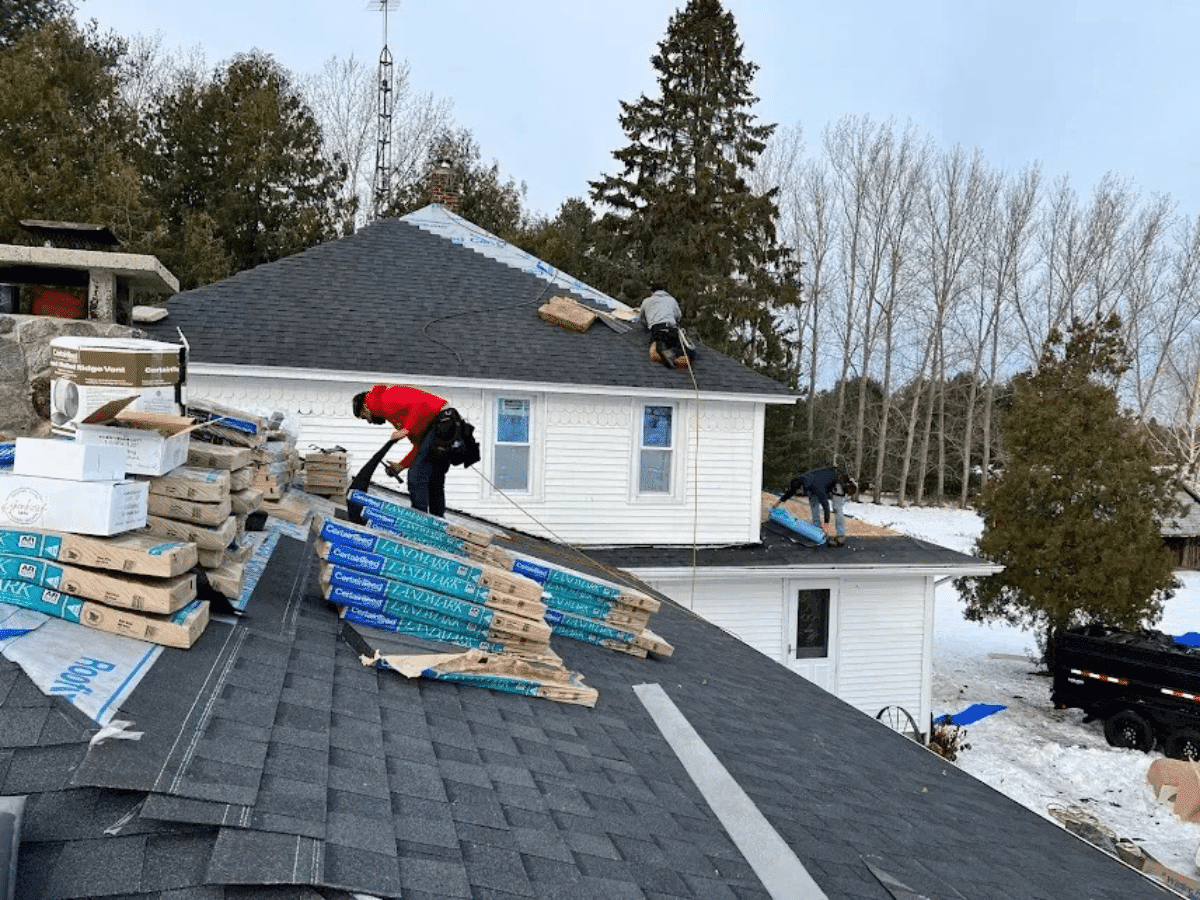
A professional installation follows a consistent sequence:
1. Initial Consultation
The contractor meets with you to discuss priorities, walk the property, and identify any specific challenges the project needs to account for.
2. Roof Inspection
A thorough assessment of structural integrity, current wear, and underlying issues. This is where decisions about tear-off depth, deck repair, and scope get made.
3. Material Selection
You choose the roofing material based on aesthetics, performance, and budget. A good contractor explains the trade-offs clearly and helps you pick something that actually fits your situation.
4. Tear-Off and Deck Preparation
Crews remove the old roofing material, usually down to the original deck. Any damaged sheathing is replaced. Skipping this step — “roofing over” the old layer — compromises the new roof and voids most manufacturer warranties.
5. Installation
New materials go on according to manufacturer specifications. This includes ice and water shield along eaves, synthetic underlayment across the deck, drip edge and starter strips, field shingles or metal panels, ridge vent, and cap. Proper ventilation and flashing details get dialed in at this stage. Every layer matters.
6. Final Inspection and Cleanup
Post-installation verification confirms all sealing, flashings, and transitions are right. Crews run magnets across the yard for stray nails, bag and haul all debris, and walk the finished job with you before calling it done.
Safety Matters
Roofing involves heights, weather exposure, and heavy materials. Professional crews follow strict safety protocols:
- Fall protection systems with proper anchors
- Appropriate footwear and PPE
- OSHA-aligned practices
- Organized, tidy work sites
A safe crew is a professional crew, and professional work reflects that discipline in the finished roof as well.
FAQ
How long does a new roof installation take?
Most residential installations are done in 1 to 3 days, depending on home size, roof complexity, material choice, and weather. Metal takes a bit longer than asphalt because of precision panel work.
Do roofers handle permits?
Yes — reputable contractors manage permits and inspection requirements as part of the project.
Which material lasts longest?
Metal, slate, and tile significantly outlast asphalt shingles. Metal typically 40–70 years, slate 50+, asphalt 20–30.
Is a new roof worth it?
Definitely. Beyond weather protection, a new roof improves energy efficiency, appearance, and often resale value. It’s one of the better returns on any home investment.
How often should a roof be replaced?
Depends on material. Asphalt: 20–30 years. Metal: 40–70 years. Tile/slate: 50+ years. Installation quality and local conditions both affect actual lifespan.
Energy Efficiency
A modern roof does more than shed water. Proper insulation, ventilation, and reflective materials reduce summer heat absorption and winter heat loss. Efficient materials lower energy bills and make the home more comfortable year-round. The roof replacement is the best opportunity to upgrade insulation and ventilation at the same time.
Ongoing Maintenance
Even a perfect installation benefits from regular maintenance:
- Seasonal inspections twice a year
- Gutter cleaning in fall and spring
- Debris and growth removal
- Prompt attention to small issues
Consistent care is how you get the roof to actually reach its rated lifespan.
Work with Falcon Roofing
Falcon Roofing has been installing new roofs across Traverse City and Northern Michigan for over 20 years. We handle asphalt, metal, flat, and specialty systems with the same crew, same materials, and same warranty every time.
- Premium materials rated for Northern Michigan conditions
- Certified installers (GAF, CertainTeed, Owens Corning)
- On-time, respectful projects that minimize disruption
- Free, detailed estimates
Call 231-233-3530 or visit us at 10609 S Timberlee Ct., Traverse City, MI for a free consultation and estimate on your new roof.
Have questions about your roof?
We're happy to help. Give us a call or request a free estimate online.