
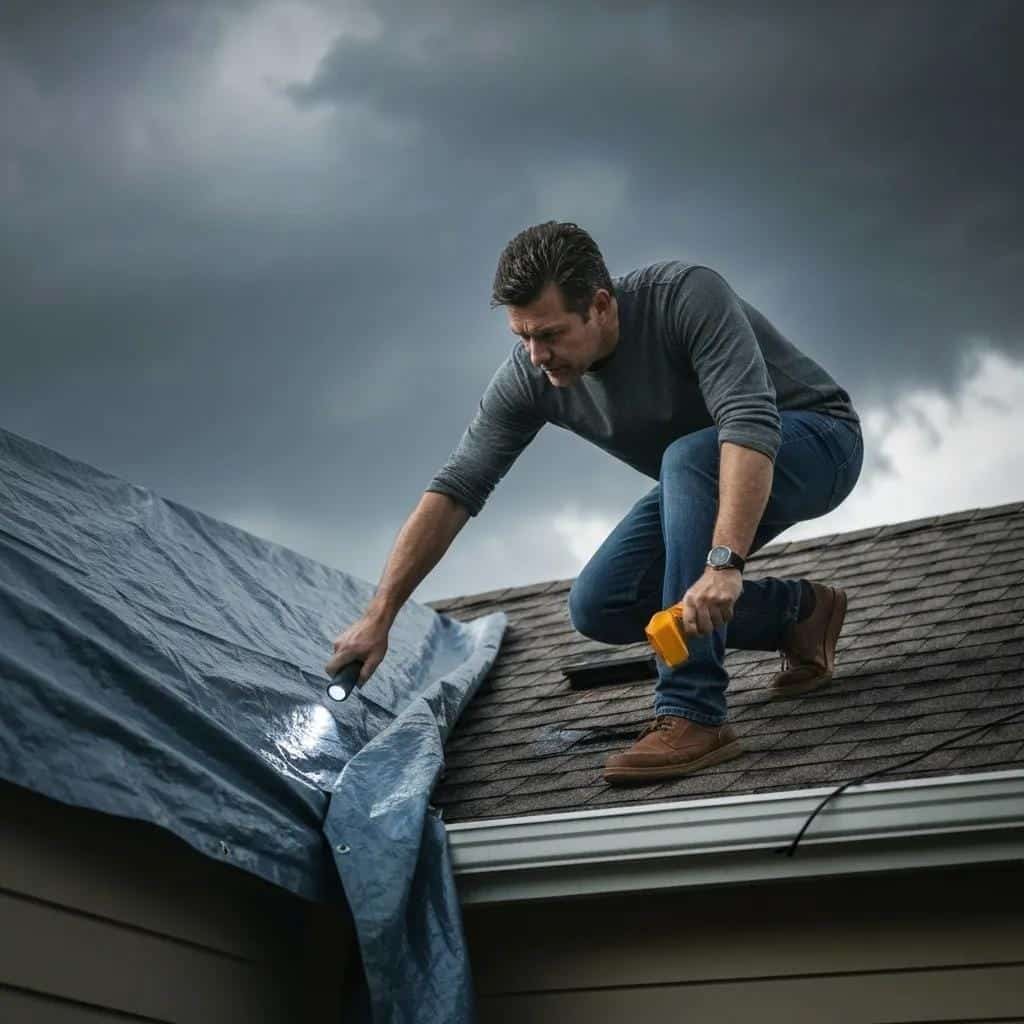
How to File a Roof Insurance Claim in Michigan (Step-by-Step)
You just had a storm come through. There’s shingles in the yard, a leak in the bedroom, or your neighbor’s tree is sitting on your ridge line. Now what?
Filing a roof insurance claim in Michigan isn’t complicated, but doing it wrong costs people money every year. Missed deadlines, incomplete documentation, and low-ball adjuster reports leave homeowners paying out of pocket for damage their policy should cover.
Here’s the process from start to finish, based on how we help homeowners through it every storm season.
Step 1: Document the Damage
Do this immediately. Before you call anyone.
Walk around your property and photograph everything. Get wide shots of the whole roof from ground level and close-ups of specific damage. Photograph the shingles in the yard. Photograph any interior water damage, stains, or leaks. Record the date and time.
If you can safely take video, do that too. Video captures things photos miss, especially the extent of debris spread or the size of damaged areas.
Don’t get on the roof yourself. That’s not safe and it’s not necessary at this stage. Ground-level photos and interior documentation are enough to start the claim.
Write down when the storm happened. Your insurance company will ask.
Step 2: Call Your Insurance Company
Call your homeowner’s insurance company and file a claim. Do this within a few days of the storm. Most Michigan policies don’t have a hard deadline, but waiting weeks or months gives the insurer reasons to question whether the damage was actually storm-related.
When you call, you’ll get a claim number. Write it down and keep it somewhere you won’t lose it. You’ll reference this number in every conversation going forward.
Tell them what happened, when it happened, and what damage you’ve observed. Stick to facts. Don’t speculate about the total cost or the extent of hidden damage.
What’s typically covered:
- Wind damage (missing shingles, lifted flashing, blown-off ridge caps)
- Hail damage (bruised or cracked shingles, dented metal)
- Falling trees and branches
- Storm-driven rain that enters through damaged areas
What’s not covered:
- Normal wear and tear
- Maintenance issues (moss, clogged gutters, aging materials)
- Damage from neglect
- Gradual leaks that existed before the storm
Your standard Michigan HO-3 homeowner’s policy covers sudden and accidental damage. It doesn’t cover things that wore out over time. This distinction matters and it’s where most claim disputes happen.
Step 3: Schedule the Adjuster Inspection
Your insurance company will send an adjuster to inspect the damage. This usually happens within 1 to 2 weeks of filing, though after major storms it can take longer because every adjuster in the region is booked.
The adjuster will get on the roof, photograph the damage, and write a report estimating the repair or replacement cost. You have the right to be present during this inspection. Be there if you can.
A few things to know about adjusters: they work for the insurance company, not for you. Most are fair and professional. But their job is to document what they see, and they sometimes miss things. That’s why Step 4 exists.
Step 4: Get an Independent Estimate from a Roofing Contractor
This is where we come in. Before you accept the adjuster’s report, have a licensed roofing contractor inspect the damage independently and provide their own estimate.
We do free storm damage inspections. We get on the roof, document every issue, and write up what the repair or replacement will actually cost. This gives you a second set of eyes and a number to compare against the adjuster’s report.
The two estimates don’t need to match exactly. But if there’s a significant gap, you need to know about it before you agree to the insurance payout.
Step 5: Compare the Reports
Put the adjuster’s report next to the contractor’s estimate. Look for differences.
Common gaps we see:
- Adjuster approves a repair, but the damage requires replacement
- Adjuster misses damage on a section of the roof they didn’t walk
- Adjuster uses pricing that’s below actual local labor and material costs
- Adjuster doesn’t account for code upgrades required by current building codes (ice and water shield, ventilation)
If the numbers are close, great. Move forward. If there’s a significant difference, go to Step 6.
Step 6: File a Supplement if Needed
If the adjuster’s estimate is lower than the actual repair cost, you or your contractor can file a supplemental claim. This is a formal request to the insurance company to review additional damage or adjust the pricing.
We handle supplement paperwork for our customers regularly. It’s a normal part of the process. We document the additional work needed, provide photos and measurements, and submit it to your insurer.
Supplements aren’t confrontational. Insurance companies expect them. They’re how the system accounts for things the initial inspection missed.
Most supplements get resolved within a week or two. If the insurer disputes the supplement, you can request a re-inspection or hire a public adjuster to represent you.
Step 7: Choose Your Contractor and Schedule the Work
Once your claim is approved and you know the payout amount, choose your contractor and schedule the job.
Your insurance company doesn’t get to choose your contractor. That’s your decision. Pick someone licensed, insured, and established in the area.
Replacement cost vs. actual cash value: Check your policy. A replacement cost policy pays the full cost to replace your roof with similar materials. An actual cash value policy deducts depreciation, meaning an older roof gets a lower payout. Most Michigan homeowners have replacement cost policies, but verify yours.
Your deductible: You’ll pay your deductible out of pocket. This is typically $1,000 to $2,500. The insurance payout covers the rest.
Timeline: What to Expect
The full process from storm to finished roof typically takes 2 to 6 weeks:
- Week 1: Document damage, file claim
- Weeks 1-2: Adjuster inspection
- Week 2-3: Get contractor estimate, compare reports
- Weeks 3-4: Supplements if needed
- Weeks 4-6: Schedule and complete the work
Major storms with widespread damage take longer because every roofer and adjuster in the region is slammed. File your claim early and don’t wait.
Warning: Storm Chasers
After every major storm, out-of-town roofing companies show up and go door-to-door. They’ll tell you they see damage. They’ll offer to handle your whole claim. Some will ask you to sign a contract on the spot.
Be careful.
Storm chasers are often unlicensed in Michigan, carry minimal insurance, and do subpar work. They collect the insurance check, do a fast job, and leave town. When problems show up six months later, they’re gone.
Signs of a storm chaser:
- Knocks on your door unsolicited after a storm
- Out-of-state license plates on their truck
- Pressures you to sign immediately
- Offers to cover your deductible (this is insurance fraud in Michigan)
- Can’t provide a local address or references
Work with a contractor who was here before the storm and will be here after. Ask for their Michigan license number and verify it.
We Help With Storm Damage Claims
We’ve helped hundreds of Northern Michigan homeowners navigate the insurance claim process. We do free storm damage inspections, provide detailed estimates, file supplements when needed, and do the work right.
If your roof took storm damage, call us. We’ll get on the roof, tell you what we find, and walk you through the next steps.
Have questions about your roof?
We're happy to help. Give us a call or request a free estimate online.