
What a Quality Roof Installation Includes in N. Michigan
When two roofing quotes come in $4,000 apart for the same house, homeowners assume someone is overcharging. Usually that isn’t what’s happening. The cheaper bid is leaving things out.
A roof is a system, not just a layer of shingles. The shingles are the part you see, but most of what keeps water out of your house is underneath them. When a bid comes in low, the savings almost always come from the parts you can’t see from the driveway, and those are exactly the parts that fail first in our climate.
Here’s what a complete residential roof installation includes in Northern Michigan, why each piece matters, and where the cheap bids cut corners.
What’s Included in a Proper Roof Installation
A quality installation is built in layers, from the deck up. Every one of these should be in your quote:
- Full tear-off of the old roof
- Deck inspection and repair of any rotten sheathing
- Drip edge at the eaves and rakes
- Ice and water shield along the eaves, valleys, and penetrations
- Synthetic underlayment across the rest of the deck
- Starter strip along every edge
- Properly nailed field shingles (six nails per shingle here, not four)
- Flashing inspected, and replaced wherever it’s worn, at every wall, chimney, vent, and skylight
- Ridge cap shingles over a ventilated ridge
- Balanced ventilation, from soffit intake to ridge exhaust
- Full cleanup, magnetic nail sweep, and a written warranty
If a line item from this list is missing or vague on your estimate, ask about it before you sign. The answer tells you a lot about who you’re hiring.
Tear-Off vs. Going Over the Old Roof
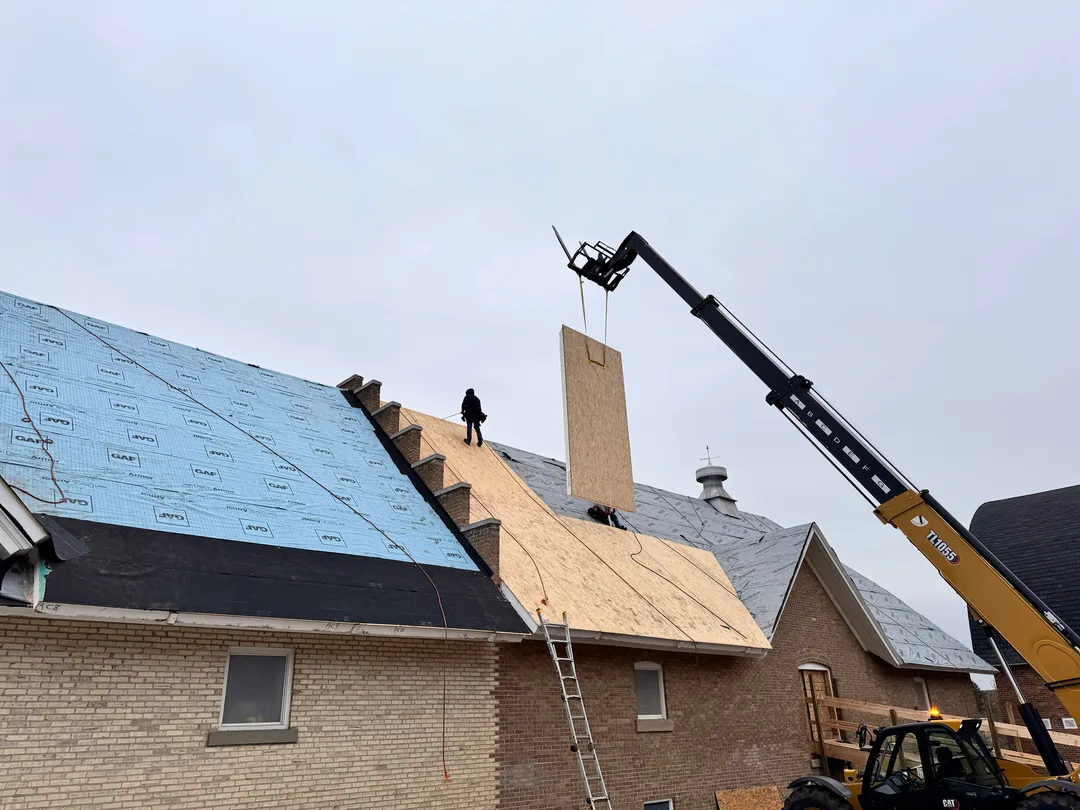
A quality installation starts with a complete tear-off, stripping the old roof down to the wood deck.
The cheaper alternative is an overlay, where new shingles go directly over the old ones. It’s faster and it saves on labor and disposal, so it shows up on budget bids. The problem is that an overlay hides everything underneath. Nobody sees the rotten decking, the failed flashing, or the old leak that’s been quietly soaking the sheathing. You also can’t install ice and water shield, which in Northern Michigan is the single most important layer on the roof.
Michigan code allows a maximum of two roof layers, so an overlay also uses up your one and only shortcut. The next roof has to be a full tear-off no matter what, and now the crew is paying to remove two layers instead of one.
We tear off to the deck on every installation. It costs more up front and it’s the only way to install a roof that actually lasts here.
Why Ice and Water Shield Is Non-Negotiable Here
Ice and water shield is a self-sealing waterproof membrane that goes down before the underlayment, along the eaves, in the valleys, and around every penetration.
In Northern Michigan, this is the layer that protects you from ice dams. When snow melts higher up a warm roof, runs down to the cold eaves, and refreezes, it backs liquid water up under the shingles. Shingles shed water, but they are not waterproof against water moving uphill under them. Ice and water shield is. Without it, that backed-up meltwater finds its way through the deck and into your soffits, walls, and ceilings.
Michigan’s energy code requires ice and water shield from the eave to at least 24 inches inside the warm wall line. On lower-pitch roofs and in valleys, we run more. A bid that skips it, or that only runs the bare minimum, is gambling with the exact failure mode our winters are built to cause. For more on the underlying problem, see our guide to ice dam prevention in Northern Michigan.
Underlayment: Synthetic vs. Felt
Underlayment is the layer that covers the rest of the deck, above the ice and water shield. It’s the secondary barrier that keeps the deck dry if wind-driven rain ever gets past the shingles.
The old standard was 15-pound felt, the black tar paper you’ve probably seen. It works, but it wrinkles when it gets wet, tears easily in wind during installation, and degrades faster. We use synthetic underlayment instead. It’s stronger, lays flatter, resists tearing, and gives crews better footing during the install, which matters on the steep, weather-exposed roofs we work on up here. Felt still shows up on budget bids because it’s cheaper by the roll.
Flashing: The Most Common Leak Point
Flashing is the metal that seals every joint where the roof meets something else: a wall, a chimney, a vent stack, a skylight. It is the most common place a roof leaks, and it’s the easiest place for a crew to cut a corner.
The shortcut is sealing the joints with a heavy bead of caulk instead of working with proper metal. Caulk dries out, cracks, and fails in a few seasons of freeze-thaw. On a quality installation, the flashing is inspected and replaced wherever it’s worn or corroded, and the joints are formed with metal that’s woven into the shingle courses so water is directed out and over, not held back. Sound flashing that’s still in good shape can stay, but it’s never just caulked over and called done. Chimneys get proper step flashing and counter-flashing, not a smear of roofing tar.
Ventilation: The Part Almost Everyone Skips
A roof needs to breathe. Balanced attic ventilation means intake vents low at the soffits and exhaust vents high at the ridge, so air moves continuously through the attic.
This matters in Northern Michigan for two reasons. In winter, good ventilation keeps the roof deck cold and uniform, which is one of the best defenses against the ice dams we just covered. In summer, it lets heat and moisture escape instead of cooking your shingles from below and rotting the deck from the inside. Poor ventilation is one of the fastest ways to kill a roof, and it voids most shingle manufacturer warranties.
Almost no budget bid addresses ventilation. A quality installer looks at your roof’s intake and exhaust venting, tells you whether it’s balanced, and corrects it as part of the job.
Nailing: Six Nails, Not Four
This is the detail nobody thinks to ask about, and it’s where fast crews cut time.
Most shingle manufacturers allow four nails per shingle in low-wind areas and require six in high-wind zones. Northern Michigan, with the wind coming off the lakes, is a six-nail region for most products, and six nails is also what the manufacturer requires to honor the full wind warranty. A crew rushing a job to four nails saves a few minutes per square, but they’ve installed a roof that can lose shingles in the first big blow and that isn’t covered when it does.
What Cheap Roofing Bids Leave Out
When a quote comes in noticeably low, the savings almost always come from this list:
- Overlay instead of tear-off, hiding the condition of the deck
- Skipped or minimal ice and water shield, the worst corner to cut here
- Felt instead of synthetic underlayment
- Reused flashing or caulk in place of new metal
- No ventilation work, even when the attic is unbalanced
- Four nails instead of six, voiding the wind warranty
- No written warranty on workmanship
None of these are visible the day the job finishes. Every one of them shows up later, usually in winter, usually as a stain on a ceiling.
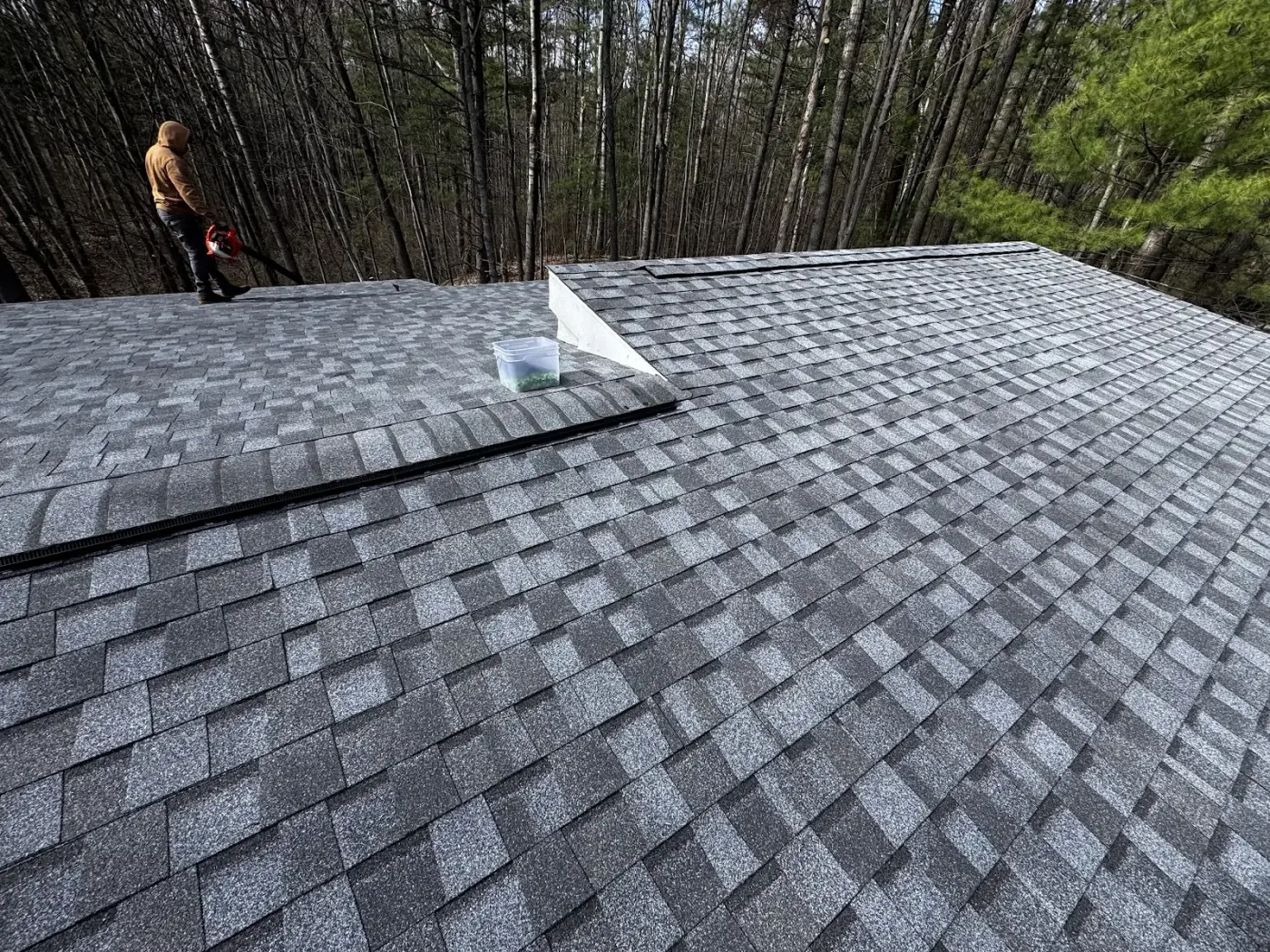 Blowing down a finished roof, the kind of detail a quality installation includes.
Questions to Ask Before You Sign
You don’t need to be a roofer to hire a good one. Ask these and listen to the answers:
- Is this a full tear-off, and how many layers are on there now?
- How far up do you run ice and water shield?
- Is the underlayment synthetic or felt?
- Will you replace the flashing where it’s worn, or just caulk over it?
- Will you check and correct my roof’s ventilation?
- How many nails per shingle, and what’s the wind warranty?
- What workmanship warranty do you provide in writing?
A contractor who does it right will have clear, confident answers and won’t mind the questions. Vague answers are an answer too.
What a Falcon Roofing Installation Includes
Every residential roof we install in Traverse City and across Northern Michigan is a full tear-off to the deck, with flashing replaced wherever it’s worn, ice and water shield carried well past code minimums, synthetic underlayment, six-nail installation, balanced ventilation, a complete magnetic-sweep cleanup, and a written workmanship warranty on top of the manufacturer’s coverage. We show you the deck once it’s exposed, and we tell you what we find.
If you’ve got two quotes that don’t match and you want to know what the difference actually buys you, we’re happy to walk through it with you line by line.
Call us at 231-233-3530 or request a free estimate online. We serve Traverse City, Petoskey, Cadillac, and the surrounding Northern Michigan area. If you want the cost side of the picture, see our Traverse City roof cost guide.

About the author
Seth Harris | Owner, Falcon Roofing
Seth Harris is the owner of Falcon Roofing and has worked in the roofing industry for over 20 years. Born and raised in Northern Michigan, he knows firsthand what our climate does to a roof, from heavy snow and ice dams to the freeze-thaw cycles that wreck poorly installed systems. He is personally involved in every project, from the first inspection to the final walkthrough.
More about Seth →Have questions about your roof?
We're happy to help. Give us a call or request a free estimate online.