
Commercial Roofing
Commercial Flat Roofing
The majority of commercial buildings in Traverse City have flat or low-slope roofs. Office buildings, retail spaces, restaurants, warehouses -- if it's commercial, there's a good chance it has a membrane roof on top. These systems work well when they're installed correctly and maintained, but they're unforgiving when they're not. One bad seam or poorly flashed penetration, and you've got water coming in.
We've been installing and maintaining commercial flat roofs across Northern Michigan for over 20 years. We know which systems hold up in our climate and which ones don't, and we install accordingly.
Commercial Membrane Systems
TPO (Thermoplastic Polyolefin)
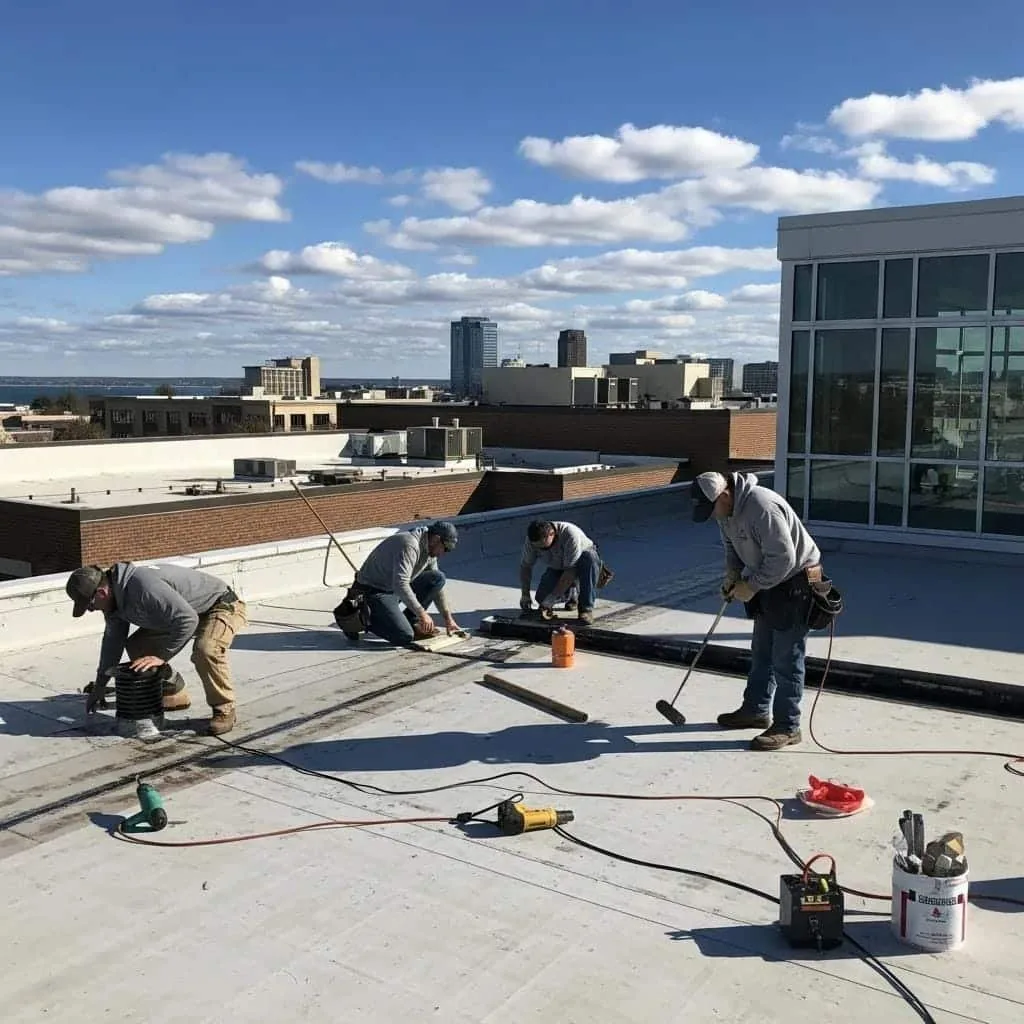
TPO has become the go-to membrane for commercial flat roofing, and it's what we install on most commercial projects. The seams are heat-welded with a robot welder, creating a bond that's stronger than the membrane itself. That's the single biggest advantage -- welded seams don't fail the way glued or taped seams can.
TPO comes in white, which reflects UV and helps with cooling costs in summer. It's also available in gray and tan for buildings where a white roof isn't desirable. We install 60-mil and 80-mil TPO depending on the application -- 60-mil is standard, 80-mil for high-traffic roofs or buildings where you want extra durability.
Warranty options on commercial TPO range from 15 to 30 years with no-dollar-limit coverage from the manufacturer. As certified installers, we can offer the full range of warranty programs.
EPDM (Ethylene Propylene Diene Monomer)
EPDM is the original single-ply membrane and it's still a solid choice for commercial buildings. It's a synthetic rubber membrane that's incredibly flexible -- it handles the thermal expansion and contraction of Northern Michigan's temperature extremes without cracking or splitting.
EPDM comes in black (which absorbs heat and can help with snow melt) or white. Seams are typically taped or adhesive-bonded. We use Firestone RubberGard EPDM, which has one of the longest track records in the industry. There are Firestone EPDM roofs around Traverse City that have been performing for 30+ years.
EPDM is often the best choice when budget is a primary concern or when replacing an existing EPDM roof, since the new membrane integrates well with existing conditions.
PVC (Polyvinyl Chloride)
PVC membranes are heat-welded like TPO but offer superior chemical resistance. That makes PVC the right choice for restaurants (grease exhaust on the roof), manufacturing facilities, or any building where chemical exposure is a concern. Animal fats from kitchen exhaust will break down TPO and EPDM over time, but PVC handles it without issue.
PVC costs more than TPO, so we don't recommend it unless there's a specific reason. But when the application calls for it, nothing else works as well.
Installation Methods
How the membrane is attached to the roof matters as much as the membrane itself. We use three attachment methods depending on the building:
- Mechanically attached -- Membrane is fastened to the deck with plates and screws, then the next sheet overlaps and is welded. Good for steel decks and reroofs. Most common method.
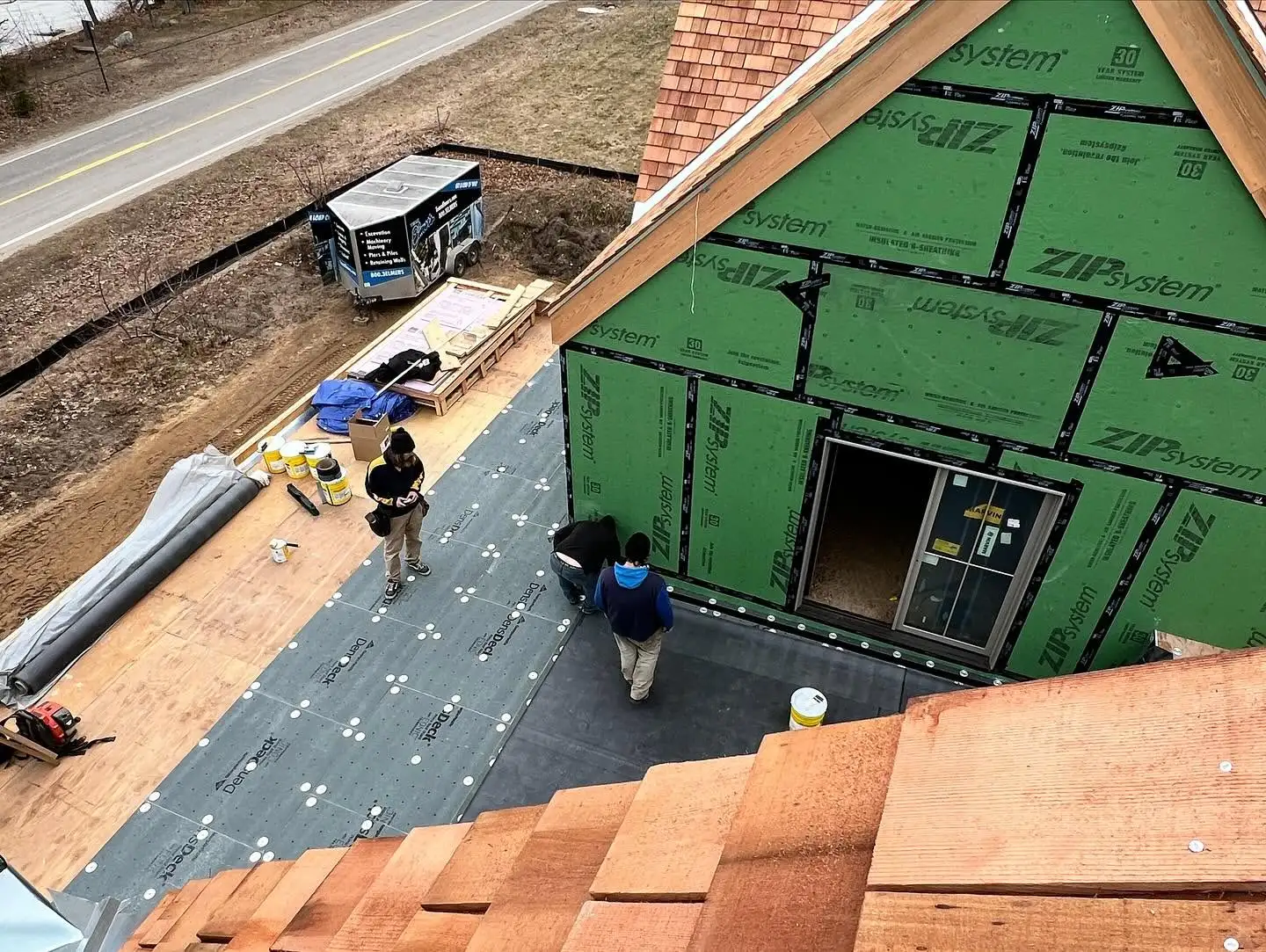
- Fully adhered -- Membrane is glued directly to the insulation or substrate. Creates a smooth, wind-resistant surface. Best for high-wind areas or buildings with rooftop equipment that needs frequent access.
- Ballasted -- Membrane is loose-laid and held down with river stone or pavers. Only works on buildings with adequate structural capacity. Less common up here due to snow load concerns adding to the ballast weight.
Northern Michigan Flat Roof Engineering
Commercial flat roofs in our area need to account for conditions that most of the country doesn't deal with:
- Snow load -- A 10,000 square foot flat roof can accumulate 50+ tons of snow. We verify structural capacity and design drainage to prevent overloading.
- Drainage -- Standing water is the enemy of every flat roof. We install tapered insulation systems to create positive drainage to internal drains or scuppers. Every square foot of the roof should drain.
- Insulation -- Michigan energy code requires specific R-values for commercial roofs. We install polyiso rigid insulation in multiple layers with staggered joints to eliminate thermal bridging.
- Freeze-thaw -- Water that gets into the roof assembly and freezes will destroy it from the inside. Vapor barriers, proper insulation placement, and air-tight membrane installation prevent this.
- Wind uplift -- Flat roofs are susceptible to wind uplift at edges and corners. We increase fastener density in these zones per FM Global recommendations.
Maintenance Programs
A flat roof that gets inspected twice a year will last significantly longer than one that gets ignored until it leaks. We offer maintenance contracts for commercial buildings that include:
- Spring and fall inspections
- Drain and scupper cleaning
- Seam and flashing inspection
- Minor repairs included in the contract
- Photographic documentation and condition reporting
- Warranty compliance verification
Whether you need a new commercial flat roof, a replacement for an aging membrane, or a maintenance program to protect your existing investment, we're here to help. Call us for a free roof assessment and estimate.
Need help with your roof? We offer free estimates.
FAQ
Frequently Asked Questions
TPO, EPDM or modified bitumen, which should we use?
TPO is a white reflective membrane that suits most commercial buildings and keeps cooling loads down. EPDM is a black rubber membrane, very durable and forgiving in cold weather. Modified bitumen suits roofs with heavy foot traffic or complicated detailing. The right answer depends on the deck, the rooftop equipment and the budget.
How long does a commercial flat roof last here?
A properly installed membrane gives you 20 to 30 years in Northern Michigan. What actually ends most flat roofs early is standing water and failed detailing around penetrations, not the membrane itself, so drainage and flashing are where the job is won.
Do you handle rooftop units and penetrations?
Yes. HVAC curbs, vents, drains and conduit are the most common leak points on a flat roof. We flash each one properly rather than relying on sealant, and we document them so future work has a reference.
Ready to get started on your roof?
Get a free, no-obligation estimate. We'll inspect your roof, explain your options, and give you honest pricing.