Residential Roofing
Metal Roofing in Traverse City, MI
If you've lived through a few Northern Michigan winters, you already know the appeal of metal roofing. Snow slides off instead of piling up. Ice dams become a non-issue. And the roof you put on today could still be going strong when your grandkids own the house. Metal roofing costs more upfront than asphalt, but for a lot of homeowners up here, the math works out in its favor over the long run.
Why Metal Roofing Makes Sense in Northern Michigan
Our climate is hard on roofs. Heavy lake-effect snow, sub-zero temperatures, ice buildup, and the constant freeze-thaw cycle take a toll on conventional roofing materials. Metal handles all of it better than just about anything else:
- Snow shedding -- Metal's smooth surface lets snow slide off before it accumulates into heavy loads. Less weight on your structure, less risk of ice dams forming at the eaves.
- Ice dam prevention -- When combined with proper ventilation and underlayment, metal roofs virtually eliminate ice dam problems. The panels expand and contract without cracking or breaking the seal.
- 40-70 year lifespan -- A quality metal roof lasts 2-3 times longer than asphalt. Many metal roofs in the Traverse City area that were installed 30+ years ago are still in great shape.
- Wind resistance -- Standing seam panels interlock and can handle 140+ mph winds. That's well beyond what we see, even in the worst November storms.
- Energy efficiency -- Metal reflects solar heat in summer and sheds snow in winter, which can lower your heating and cooling costs.
- Low maintenance -- No granule loss, no curling, no moss growth. An occasional inspection and gutter cleaning is about all you need.
Standing Seam vs. Exposed Fastener
There are two main types of metal roofing we install on homes in the Traverse City area. Both are good products, but they're suited to different situations and budgets.
Standing Seam Metal Roofing
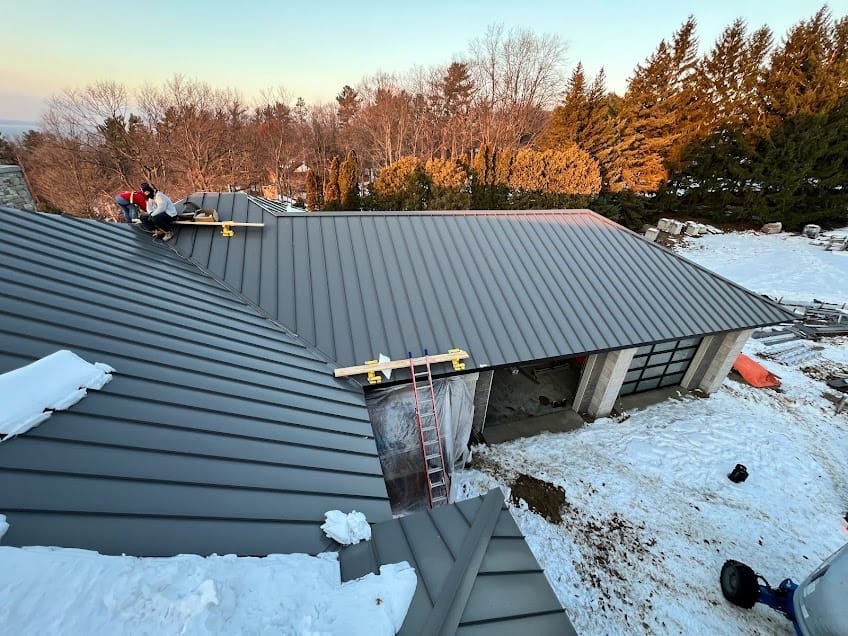
This is the premium option. Standing seam panels have raised seams that interlock, with all fasteners hidden underneath. No screws are exposed to the weather, which means no potential leak points at fastener locations. The panels float on clips that allow them to expand and contract with temperature changes -- important when we go from -15 in January to 85 in July.
Standing seam is what we recommend for most residential projects. It looks clean, performs the best, and gives you the longest service life. It costs more, but you're getting a roof that will likely outlast the mortgage.
Exposed Fastener Metal Roofing
Exposed fastener panels (sometimes called screw-down panels) are a more affordable option. The panels overlap and are secured with screws that have rubber washers to seal the penetration. It's a proven system that works well, especially on simpler roof lines like pole barns, garages, and cabins.
The tradeoff is that those rubber washers will eventually dry out and need replacement -- typically around 15-20 years. The panels also can't expand and contract as freely, which can cause some oil-canning (waviness) over time. For a primary residence, we generally steer people toward standing seam. For a detached garage or secondary structure, exposed fastener is a great, cost-effective choice.
Materials and Finishes
We install metal roofing in steel (most common for residential), aluminum (for waterfront properties where salt exposure is a concern), and copper (for accent work and high-end projects). Steel panels come with Kynar 500 or similar PVDF paint finishes that resist fading, chalking, and corrosion for decades.
Color options range from traditional charcoal, black, and dark bronze to greens, reds, and custom colors. We'll bring samples to your home so you can see how they look against your siding and trim in natural light.
Snow Guards and Accessories
Because metal roofs shed snow so effectively, we install snow guards over entryways, walkways, and anywhere a snow slide could cause problems. We also pay close attention to gutter placement and drip edge details to make sure meltwater goes where it should.
Is Metal Roofing Right for Your Home?
Metal isn't the right choice for every situation. If you're planning to sell the house in a couple years, asphalt might make more financial sense. But if you're staying put, if you're tired of dealing with ice dams, or if you want a roof you'll never have to replace again, metal is worth a serious look.
We'll come out, look at your roof, and give you an honest comparison of your options -- including pricing for both metal and asphalt so you can make an informed decision. In the meantime, our comparison of the best roofing materials for Northern Michigan lays out the trade-offs.
Need help with your roof? We offer free estimates.
FAQ
Metal Roofing FAQs
How much does a metal roof cost in Traverse City?
For a typical Traverse City home, standing seam metal roofing usually runs $15,000 to $30,000 installed, depending on roof size, pitch, panel profile, and metal type. That is more than asphalt up front, but a metal roof can be the last roof you ever buy. We give you a detailed estimate with both metal and asphalt pricing so you can compare honestly.
How long does a metal roof last in Northern Michigan?
A properly installed metal roof lasts 40 to 70 years here, even with our heavy snow and freeze-thaw cycles. Standing seam systems with concealed fasteners have no exposed rubber washers to dry out, so they typically reach the upper end of that range. Asphalt shingles, by comparison, usually last 15 to 25 years in this climate.
Will a metal roof help with ice dams?
Yes. Metal sheds snow far better than asphalt, so snow slides off before it can melt, refreeze at the eaves, and form an ice dam. We pair that with proper attic ventilation and snow guards over entryways and walkways so the snow comes off where it should, not onto your front step.
Is a metal roof noisy when it rains?
No. A modern metal roof is installed over solid decking and underlayment, not open framing like an old barn. With attic insulation in place, most homeowners say it sounds no louder than an asphalt roof during rain or hail.
Should I choose standing seam or exposed fastener?
For a primary residence we generally recommend standing seam. Its fasteners are hidden, it sheds snow cleanly, and it lasts the longest. Exposed fastener panels cost less and are a great choice for a detached garage or outbuilding, but the rubber washers need replacement around 15 to 20 years. We will walk your roof and recommend the right fit.
Ready to get started on your roof?
Get a free, no-obligation estimate. We'll inspect your roof, explain your options, and give you honest pricing.