
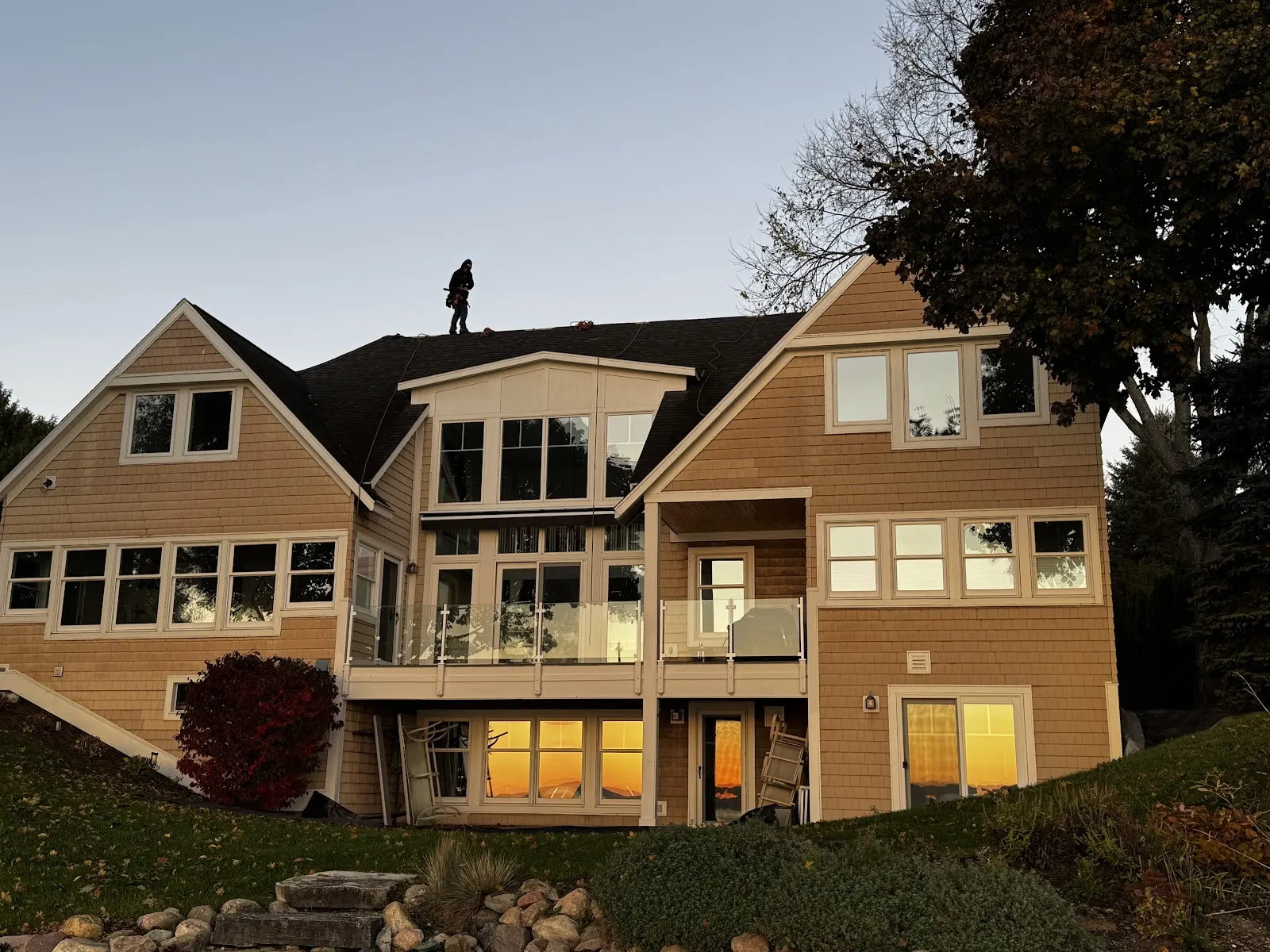
How a New Roof Improves Your Home's Energy Efficiency
Up here, the heating season runs long. We see real cold from November into April, and a lot of snow on top of it. When people ask me about an “energy-efficient roof,” most of the savings worth chasing in Northern Michigan come down to keeping heat in the house and keeping the roof cold and dry through the winter. Summer cooling matters too, but our climate is heating-dominated, and that’s where a re-roof can actually move your bills.
The thing is, a roof is more than shingles. When the old roof comes off, you have access to the ventilation and the top of the insulation in a way you almost never do otherwise. That’s the moment to fix the things that have been quietly costing you money and shortening the life of your roof. Here’s how I think about it after 20-plus years of doing this in Grand Traverse County.
Why Heating, Not Cooling, Is the Real Story Here
Down south, energy talk is all about reflecting summer sun off the roof. That’s a smaller piece of the puzzle in our climate. Our problem is the opposite half of the year: warm air inside the house wants to rise into the attic and escape, and we’re fighting that for five or six months straight.
When that warm air gets into a cold, poorly ventilated attic, two things happen. You pay to heat air that leaves the building, and that escaping heat warms the underside of the roof deck. Warm deck, cold eaves, fresh snow on top: that’s the recipe for ice dams. The snow melts, runs down to the cold overhang, refreezes, and backs water up under the shingles. So the same problems that drive your heating bill up are the ones that cause the leaks we get called out for every February. Our guide to ice dam prevention in Northern Michigan walks through that chain in detail.
The fix is not exotic. It’s a cold, well-vented attic with enough insulation under it and the air leaks sealed up. A re-roof is the right time to get all three pointed in the same direction.
What This Looks Like on a Real Job
Let me give you a concrete example, because “energy efficiency” stays vague until you put it on an actual house.
A common one we run into: a 1970s or 1980s home, story-and-a-half or ranch, with ridge vent that someone added at some point but soffit vents that are either painted over, stuffed with old blown-in insulation, or never cut in properly. That’s an unbalanced system. The ridge is trying to exhaust air, but there’s no intake feeding it, so it pulls conditioned air up out of the house through every gap it can find instead of drawing cold air in from the eaves. The homeowner usually tells us the upstairs is cold and drafty in winter and they get icicles hanging off the front edge every year.
When we tear that roof off, we can correct the whole airflow path. We open up and screen the soffit intake, run proper baffles at the eaves so the insulation can’t choke off the airflow again, and balance the intake to the ridge exhaust so air actually moves from the bottom of the roof to the top. While the deck is open is also the natural time to deal with the insulation. A lot of these attics are sitting at R-19 or even R-13, which was normal when they were built. Current Michigan code for our climate zone wants attics up around R-49. Bringing an attic from R-19 toward R-49 during a reroof is one of the better dollar-for-dollar upgrades available to you, because you are already paying for access and a crew on site.
I won’t promise you a specific percentage off your bill, because every house is different and your furnace, windows, and habits all factor in. But correcting bad ventilation and topping insulation from R-19 toward R-49 is the difference between heat staying in your living space and heat leaking into a cold attic. Homeowners feel it as a warmer upstairs, fewer drafts, and a lot less ice building up on the eaves. The roof itself lasts longer too, because the deck and shingles stay colder and drier.
A couple of honest notes. We do this work as part of a roof project, when the deck is open and we are already up there. We are not running a standalone attic inspection service, and I am not going to tell you we crawl through your attic on a sales call. What I am telling you is that a reroof is the right window to fix ventilation and insulation, and we plan for it.
The Pieces That Matter Most in Our Climate
Balanced ventilation
Airflow from the soffit intake up to the ridge exhaust is the single thing I’d put first for a roof in Northern Michigan. Balanced ventilation keeps the deck cold in winter, which is what holds ice dams off your eaves, and it carries out the moisture that would otherwise condense on the underside of a cold deck and rot it. The key word is balanced. Ridge vent with no working intake is worse than no ridge vent at all, because it pulls heated air straight up out of the house. We size intake and exhaust to match when we re-roof.
Insulation
Insulation and ventilation work together. The insulation keeps your heat in the living space, and the ventilation keeps the cold attic above it cold. Older Traverse City homes often sit at R-19 or less in the attic, which leaves real money on the table every heating season. Code for our climate zone targets roughly R-49. The open-deck stage of a reroof is the easiest and cheapest time to add insulation, because nobody has to work around a finished roof to do it.
Air sealing
A lot of what people blame on thin insulation is actually air leaking through gaps. Recessed lights, the attic hatch, plumbing stacks, and wiring penetrations all let warm house air pour into the attic, where it drives up your heating bill and feeds ice dams. Sealing those penetrations while we have the area open is cheap and it makes the insulation above them actually do its job.
Ice and water shield
In our snow load, full ice and water shield along the eaves is doing two jobs. It is the last line of defense if an ice dam does try to back water up under the shingles, and a continuous, properly lapped membrane also tightens up the most leak-prone edge of the roof against air movement. We run it well past the interior wall line on every roof, and further on low-slope sections and known ice-dam spots.
Flashing
While we are on the subject of the thermal envelope: flashing around chimneys, walls, and skylights is inspected and replaced where worn during a reroof. I don’t claim every roof needs all new flashing. Some of it is fine and we reuse it. But corroded or poorly sealed flashing is both a leak path and an air leak, so we check it and replace what needs replacing rather than burying old metal under new shingles.
Why the Crew Matters as Much as the Material
None of this works if the install is sloppy. You can buy the best shingle on the truck and still end up with a cold, drafty house if the ventilation isn’t balanced, the baffles get crushed by insulation, or the penetrations never get sealed. The details are where the efficiency lives, and the details are exactly what a cut-rate crew leaves out to hit a low number.
When we re-roof a home here, we plan the ventilation, insulation, and air sealing as part of the job, not as an upsell tacked on at the end. We size the intake to the exhaust, keep the baffles clear at the eaves, seal the penetrations while the area is open, and lap the ice and water shield and underlayment into the flashing so the edge of the roof is tight against both water and air. That is what actually turns a new roof into a warmer, cheaper-to-heat house instead of just new-looking shingles over the same old problems. It’s all part of what a quality roof installation includes up here.
Talk to Us Before You Re-Roof
If you are planning a roof replacement and your upstairs is cold, your bills feel high, or you fight ice dams every winter, that roof project is your best chance to fix the cause and not just the symptom. We will look at the whole picture, ventilation and insulation included, and give you a straight answer about what your house needs.
We give free, written estimates to homeowners across Traverse City and the surrounding communities, from energy-efficient roofing in Gaylord over to Charlevoix and throughout Leelanau and Benzie counties.

About the author
Seth Harris | Owner, Falcon Roofing
Seth Harris is the owner of Falcon Roofing and has worked in the roofing industry for over 20 years. Born and raised in Northern Michigan, he knows firsthand what our climate does to a roof, from heavy snow and ice dams to the freeze-thaw cycles that wreck poorly installed systems. He is personally involved in every project, from the first inspection to the final walkthrough.
More about Seth →Have questions about your roof?
We're happy to help. Give us a call or request a free estimate online.