Metal vs. Asphalt Roof: Which Lasts Longer?
When a homeowner asks me which roof lasts longer, the honest answer is short. Metal does, by a wide margin. The longer answer, the one that actually helps you decide, is about how much longer, what wears out first on each, and how Northern Michigan winters speed that wear up.
I’ve been replacing roofs up here for over twenty years. I’ve torn off asphalt that gave up at fifteen and pulled panels off metal roofs that still had decades left. Here’s how the two materials actually age in this climate.
The Short Version: Years You Can Expect
A properly installed metal roof lasts roughly twice as long as asphalt, sometimes more.
| Material | Typical Lifespan in Northern Michigan |
|---|---|
| Asphalt shingles | 15 to 30 years |
| Metal roofing | 40 to 70 years |
Those are real numbers for the jobs we do, not brochure numbers. A 3-tab shingle roof in this climate is closer to the 15-year end. Architectural shingles installed well, with good ventilation, get you to 25 or 30. Standing seam metal, installed once, outlives all of it.
The reason for the gap isn’t complicated. The two roofs fail for completely different reasons.
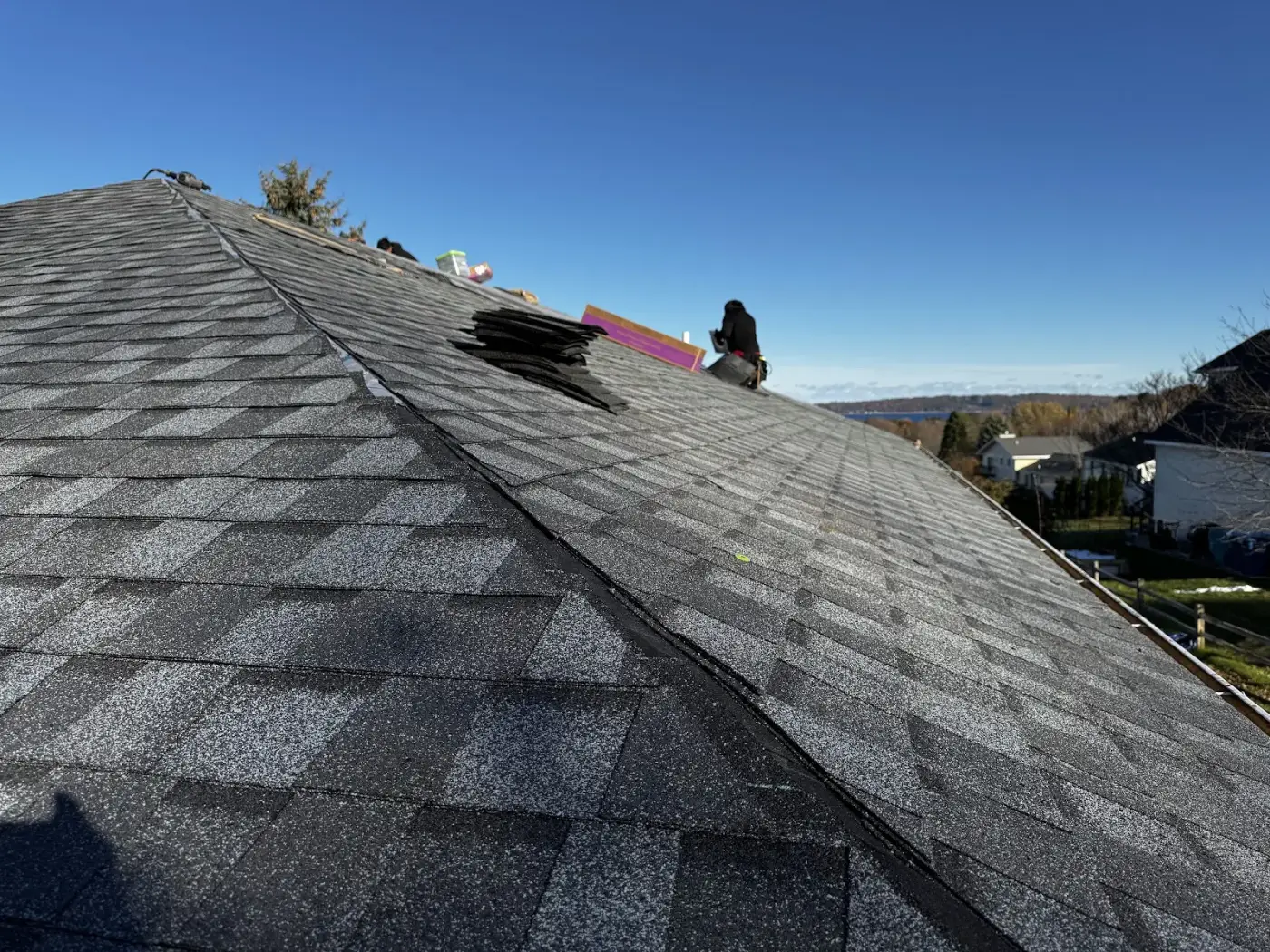 Architectural asphalt shingles going down, the value benchmark homeowners weigh metal against.
What Wears Out First on Each
Asphalt: the granules go, then the mat
An asphalt shingle is a fiberglass mat coated in asphalt and topped with ceramic granules. Those granules are the sunscreen. They take the UV hit so the asphalt underneath doesn’t dry out and crack.
Up here, the granules wear off from two directions. Summer sun bakes them loose, and winter does the rest. Every freeze-thaw cycle works at the surface, and snow sliding off a steep pitch sands them away a little at a time. Once you start seeing granules in the gutters, the clock is running. The mat dries out, the shingle curls at the edges, and water finds its way in at the valleys and the eaves.
That’s why an asphalt roof rarely dies all at once. It wears thin, then it leaks, usually right where the weather works hardest.
Metal: the finish and the fasteners, not the metal
Metal doesn’t lose granules because it doesn’t have any. What ages on a metal roof is the coating and the connection points, not the panel itself.
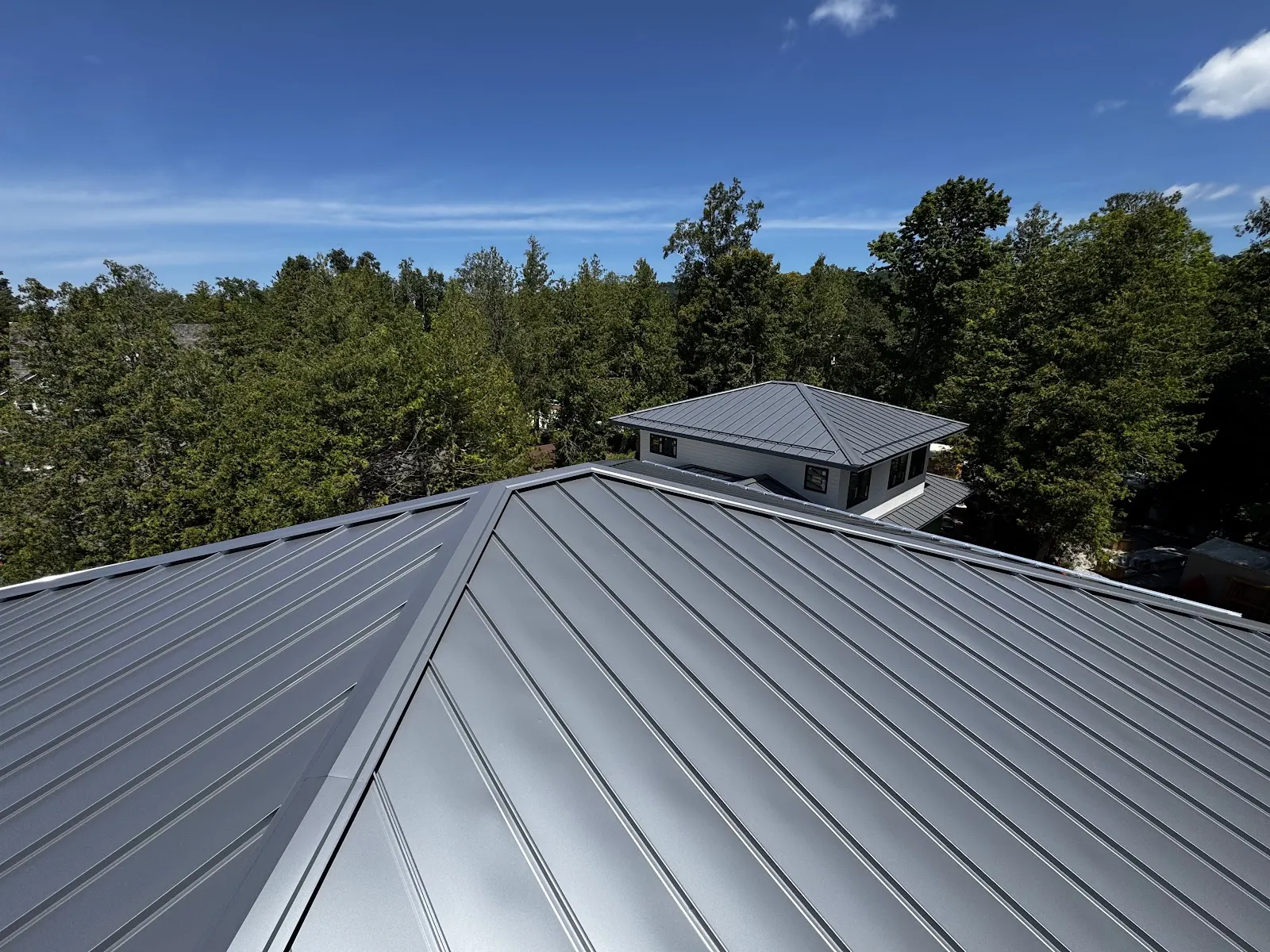
On a standing seam roof the fasteners are hidden and the panels are locked at the seams, so there’s very little to fail. The painted finish slowly weathers over decades, and that’s about it. On exposed-fastener panels the rubber gaskets under the screws are the weak point. They dry out and need attention long before the steel does, which is part of why we steer most homeowners toward standing seam. If you want to go deeper on panels and metals, see our guide to metal roofing material types.
Put simply: asphalt wears out from the top down, and metal mostly just sits there. That difference is the whole lifespan story.
How Northern Michigan Shortens Both
Our winters are hard on every roof. They’re just harder on asphalt.
Freeze-thaw cycling. Water gets into the surface of a shingle, freezes overnight, expands, and thaws the next afternoon. Repeat that a few hundred times a winter and you accelerate the granule loss and cracking that ends an asphalt roof. Metal doesn’t absorb water, so the same cycle has nothing to grab onto. The panels expand and contract with temperature, but modern clip systems are built to let them move without stress.
Ice dams. When heat escapes into the attic, it melts snow on the roof, the water runs down to the cold eave and refreezes, and the dam pushes meltwater back up under the shingles. On asphalt, that backed-up water is a direct path to a leak and to early rot at the deck. Worth being clear here: ice dams are an insulation and ventilation problem more than a material problem. A metal roof sheds snow better, but neither material fixes a warm attic. That’s a separate job, and not one we diagnose by climbing into your attic. If you’re fighting the same dam every winter, our guide to ice dam prevention covers what’s actually happening in the attic and how to fix it.
Snow load and snow shedding. Metal sheds snow naturally, which keeps weight off the structure and keeps that wet snow from sitting on the roof and working at the surface all season. On asphalt, snow tends to hang on longer, and that constant moisture against a wearing surface is exactly what takes years off the shingle.
The takeaway: the same climate that gets an asphalt roof to maybe 20 years barely touches a metal one. Our winters widen the lifespan gap rather than narrowing it.
Does Longer-Lasting Mean Cheaper?
Not upfront. Metal costs more to install, usually close to double asphalt for a comparable home. The lifespan argument is a cost-per-year argument, not a sticker-price one. Our Traverse City roof cost guide lays out the installed prices for both.
The way I put it to homeowners: spread the price over the years of life you actually get. An asphalt roof you replace twice over a long stretch of ownership can quietly cost more than one metal roof that you install once and forget. If you’re staying in the house long-term, the math tends to favor metal. If you’re on a tighter budget or you might move in a few years, a good architectural shingle roof is an honest, sensible choice that’ll serve you well.
I’m not here to talk you into the more expensive roof. I’m here to tell you what each one will actually give you.
When Each One Makes Sense
Asphalt is the right call when:
- You want the lowest upfront cost with solid, proven performance
- You may sell or move within the next ten or fifteen years
- Your home’s style suits a traditional shingle look
Metal is the right call when:
- You’re staying put and want to buy a roof once
- You’re tired of snow and ice sitting on the roof all winter
- You’re already weighing the long view on cost rather than the cheapest number today
Both are good roofs. We install both, and we install them to last as long as the material allows. When we tear off your old roof we inspect the decking and the flashing, and we replace flashing where it’s worn rather than reusing something that’s going to leak in three years. A roof only reaches its rated lifespan if what’s underneath and around it is sound. If you also have a flat section to plan for, our best roofing materials for Northern Michigan roundup adds TPO and EPDM to the same comparison.
The Bottom Line
Metal lasts longer, full stop. Forty to seventy years against twenty to thirty for asphalt, and Northern Michigan’s freeze-thaw winters stretch that gap rather than close it. Asphalt wears out from the surface down as the granules go; metal mostly just keeps doing its job.
Which one is right for you comes down to how long you’re staying and what you want to spend now versus later. We’ll give you a straight read on both for your specific roof, no pressure either way.

About the author
Seth Harris | Owner, Falcon Roofing
Seth Harris is the owner of Falcon Roofing and has worked in the roofing industry for over 20 years. Born and raised in Northern Michigan, he knows firsthand what our climate does to a roof, from heavy snow and ice dams to the freeze-thaw cycles that wreck poorly installed systems. He is personally involved in every project, from the first inspection to the final walkthrough.
More about Seth →Have questions about your roof?
We're happy to help. Give us a call or request a free estimate online.