How Often Should You Inspect Your Roof? A Homeowner's Guide
Most homeowners never think about their roof until water shows up on a ceiling. By then the problem has usually been building for months. A roof inspection is how you get ahead of that, and in Northern Michigan, where a roof takes a beating from lake-effect snow, ice, and freeze-thaw cycles, it matters more than it does almost anywhere else.
This guide covers how often to inspect, what a real inspection covers, and when to stop watching from the ground and call a professional.
How Often Should You Actually Inspect?
As a baseline, inspect your roof twice a year, once in spring and once in fall.
- Spring catches the damage winter just did: shingles loosened by ice, flashing pulled by snow load, granules washed into the gutters.
- Fall makes sure the roof is ready for the next winter before the first lake-effect storm rolls through.
Beyond that schedule, a few situations call for an inspection right away.
After severe weather
High wind off Grand Traverse Bay, hail, and heavy wet snow all damage roofs, and the damage usually is not obvious from the ground. After any major storm, it is worth having the roof looked at for lifted or missing shingles and displaced flashing before the next system makes a small problem a big one.
Before buying or selling a home
A roof inspection is essential during a real estate transaction. Buyers want to know what they are getting. Sellers are better off finding and fixing problems before they derail a deal at the closing table.
When you notice signs inside the house
Water stains on a ceiling, peeling paint at the top of a wall, or a musty smell in an upstairs room usually trace back to the roof. Do not wait. Water travels along the underside of the deck before it drops, so by the time you see a stain, the entry point has been leaking for a while.
When the roof is getting older
Asphalt shingle roofs in this climate typically last 20 to 25 years, less than the 25 to 30 they are rated for, because our winters are hard on them. Once your roof is in that range, move to a yearly inspection so you can plan a replacement on your terms instead of scrambling during a January leak. If you’re already seeing wear, our guide to the signs you need a new roof covers what to watch for.
Why It Matters More in Northern Michigan
The same roof that might last 30 years in a mild climate gets a shorter life up here. Lake-effect snow piles weight on the deck. Meltwater refreezes at the cold eaves and backs up under the shingles as ice dams. The constant freeze-thaw swing works fasteners loose and opens up flashing seams. None of that announces itself. It shows up as a leak two winters later, after the damage is already done. Regular inspection is how you catch it while it is still a small repair.
What a Professional Inspection Covers
A visual check from the ground is a fine starting point, but never climb on the roof yourself. Damaged decking can give way under your weight, and our roofs spend half the year slick. Here is what a thorough professional inspection covers:
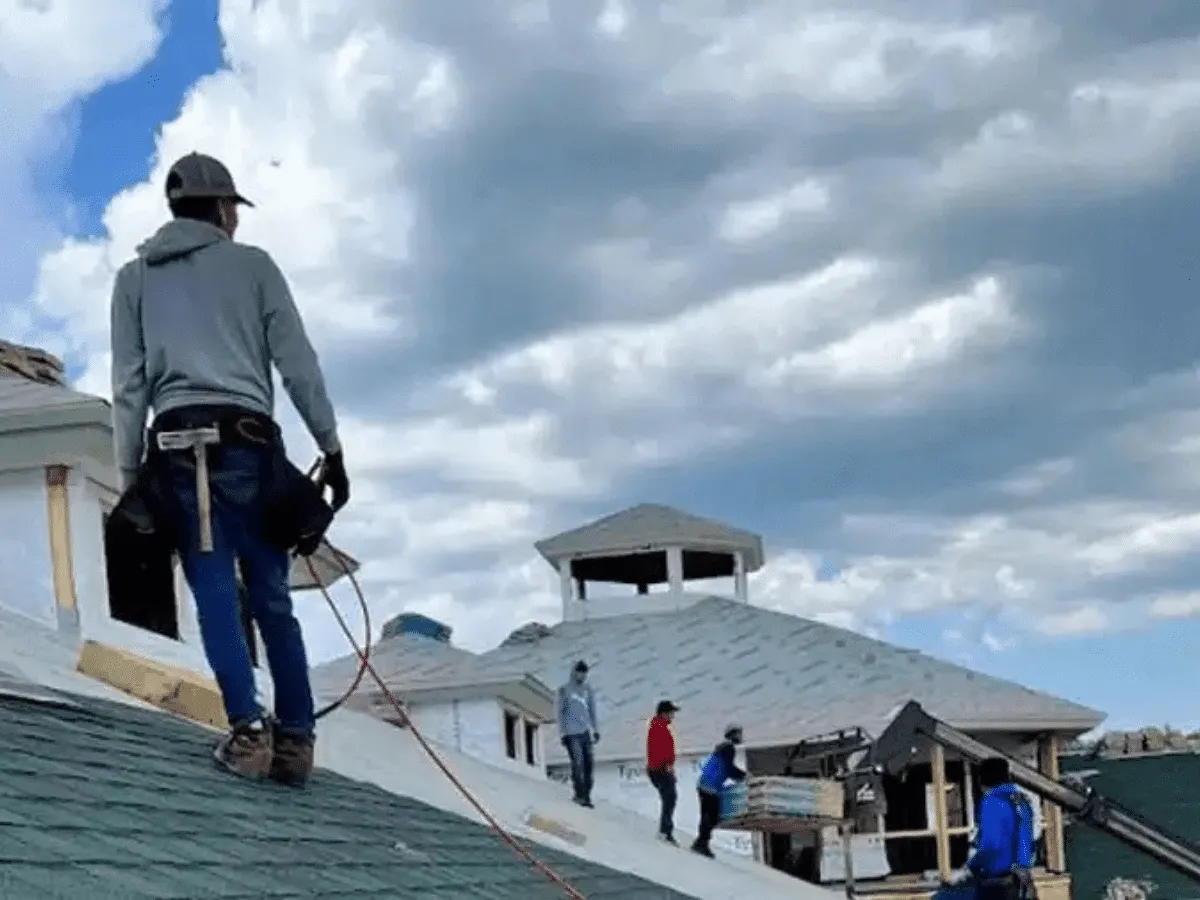 One of our team on a Traverse City home mid-inspection. Every walk-through is done by someone from our crew, not a subcontractor, and every finding is documented with photos before we come off the roof.
- Shingles checked for missing, cracked, curling, or lifted units, plus granule loss that signals end-of-life wear
- Flashing around chimneys, vents, skylights, and valleys, where most leaks actually start
- Penetrations such as pipe boots and exhaust vents, common failure points that dry out and crack
- Gutters and drainage for clogs, misalignment, and the kind of backup that feeds ice dams
- Roof deck assessed from the surface for soft spots and sagging that point to rot underneath
- Rooflines sighted for dips or waves that signal a failing deck
You get the findings documented with photos and a written report: what is in good shape, what needs attention, and a realistic timeline for eventual replacement.
Modern Inspection Tools
A good inspection is more than a person on a ladder. The tools we and other quality contractors use add real precision:
- Drones image steep or hard-to-reach sections in high resolution without anyone walking a slick roof
- Thermal imaging finds temperature differences that flag trapped moisture and missing insulation before they ever show as a stain
- Moisture meters confirm at suspect spots whether water is actually present in the structure
These catch problems that a surface-level look misses.
The Math on Catching Problems Early
This is why inspections pay for themselves. The same problem costs a fraction to fix when it is caught early:
| Issue | Cost if caught early | Cost if ignored |
|---|---|---|
| Minor leak | $200 to $500 | $5,000 to $10,000 |
| Damaged shingles | $300 to $700 | $8,000 to $20,000 |
| Flashing failure | $400 to $800 | $15,000 to $30,000 |
An inspection that finds a $300 repair routinely saves a $15,000 remediation job down the road, plus the drywall, insulation, and ceiling work that comes with water damage.
Maintaining Your Roof Between Inspections
Inspections are not a substitute for upkeep. A few habits that add years to a roof here:
- Keep gutters clear, especially in fall and after storms. Blocked gutters are where ice dams and eave leaks begin.
- Watch the eaves in winter. Big icicles and ice ridges at the gutter line are a sign of an ice dam forming and a ventilation or insulation problem worth addressing. See our guide to ice dam prevention in Northern Michigan for the underlying fix.
- Fix small problems fast. A $200 repair ignored for a year often becomes a $5,000 one.
- Use materials built for this climate when you replace. Cheap shingles fail fast in Northern Michigan.
Choosing the Right Inspector
Credentials and local experience matter more than the lowest price. Look for:
- Manufacturer certifications such as GAF Master Elite or CertainTeed SELECT ShingleMaster
- Local track record, because a roofer who works this climate every winter spots the subtle problems a transplant misses
- Proof of insurance, general liability and workers’ compensation
- Honest reviews that mention thoroughness and straight answers, not a sales pitch
What Our Inspection Customers Say
A recent Google review that gets at why an honest inspection matters:
“Other roofers told me my 6 year old roof needed to be replaced. These guys said my roof was in good shape; turns out I had a plumbing issue. Honest and professional. 5 stars.”
— Andrew Riegel, Google review
You can read more on our reviews page.
Work with Falcon Roofing
We provide thorough, honest roof inspections for homes across Traverse City, Petoskey, Cadillac, and the surrounding Northern Michigan area. We document everything with photos, write clear reports, and only recommend work that actually needs doing. We have been on these roofs for over 20 years, and we stand behind what we find.
Call us at 231-233-3530 or request an inspection online to get a clear, documented picture of your roof’s condition.

About the author
Seth Harris | Owner, Falcon Roofing
Seth Harris is the owner of Falcon Roofing and has worked in the roofing industry for over 20 years. Born and raised in Northern Michigan, he knows firsthand what our climate does to a roof, from heavy snow and ice dams to the freeze-thaw cycles that wreck poorly installed systems. He is personally involved in every project, from the first inspection to the final walkthrough.
More about Seth →Have questions about your roof?
We're happy to help. Give us a call or request a free estimate online.