
How to Spot Hail and Storm Damage on Your Roof in Northern Michigan
Northern Michigan weather has a way of surprising you. A calm July afternoon on Grand Traverse Bay can turn into dark clouds, sideways rain, and pea-sized hail in under an hour.
Once the sun comes back out, your yard looks fine, and your roof looks fine from the driveway. That is where the trouble starts. Most storm damage is easy to miss from the ground, and a small bruise on a shingle in the summer can turn into a leak over your bedroom by January.
This guide walks you through how to check your roof for hail damage after a storm, what the warning signs actually look like, and when it makes sense to call a professional. You can do most of this yourself from the ground, safely, without ever touching a ladder.
When Storms Hit Hardest in Northern Michigan
Our region takes on storm damage in a few predictable windows through the year:
- Late spring and summer (May through August): Thunderstorms rolling in off Lake Michigan bring hail, downpours, and straight-line winds. This is prime season for roof hail damage across Traverse City, Petoskey, and Cadillac.
- Fall (September through November): High winds and the first hard freezes loosen shingles and pull at weak spots.
- Winter: Lake-effect snow, ice dams, and freeze-thaw cycles pry at anything a summer storm already weakened.
Here is the part homeowners underestimate: a hailstorm in June can quietly set up a leak that stays hidden until the heavy snow load arrives in February. Catching the damage early is what keeps a cheap fix from becoming a full tear-off.
What Hail Damage Looks Like on a Roof
Hail rarely punches a clean hole through a roof. It bruises the surface, and it shows up differently depending on your roofing material.
On asphalt shingles (the most common roof in our area):
- Dark spots or bruises where the protective granules have been knocked loose
- Bald patches where the black asphalt mat underneath shows through
- A soft or dented feel when the spot is pressed, which a roofer will check safely from the roof
- Granules collecting in your gutters and at the base of your downspouts
On metal roofs:
- Dents and dimples across the panels, easiest to see in low, angled sunlight
- Chipped, scratched, or flaked finish
- Dented vents, flashing, and gutters, which are often the very first clue
On gutters, flashing, and vent caps:
Soft metal dents before shingles show obvious wear, so your gutters, valleys, and vent caps are a reliable tell. If those are dimpled, your shingles almost certainly took a hit too.
What Wind and Storm Damage Looks Like
Northern Michigan gets more high-wind days than most people expect, especially on properties with open exposure near the bays and the lakeshore. Wind damage is usually easier to spot than hail. Look for:
- Missing shingles, or shingles lifted and curled along the edges
- Creased or flapping shingles that got bent back by a gust and set down again
- Exposed nail heads or torn underlayment
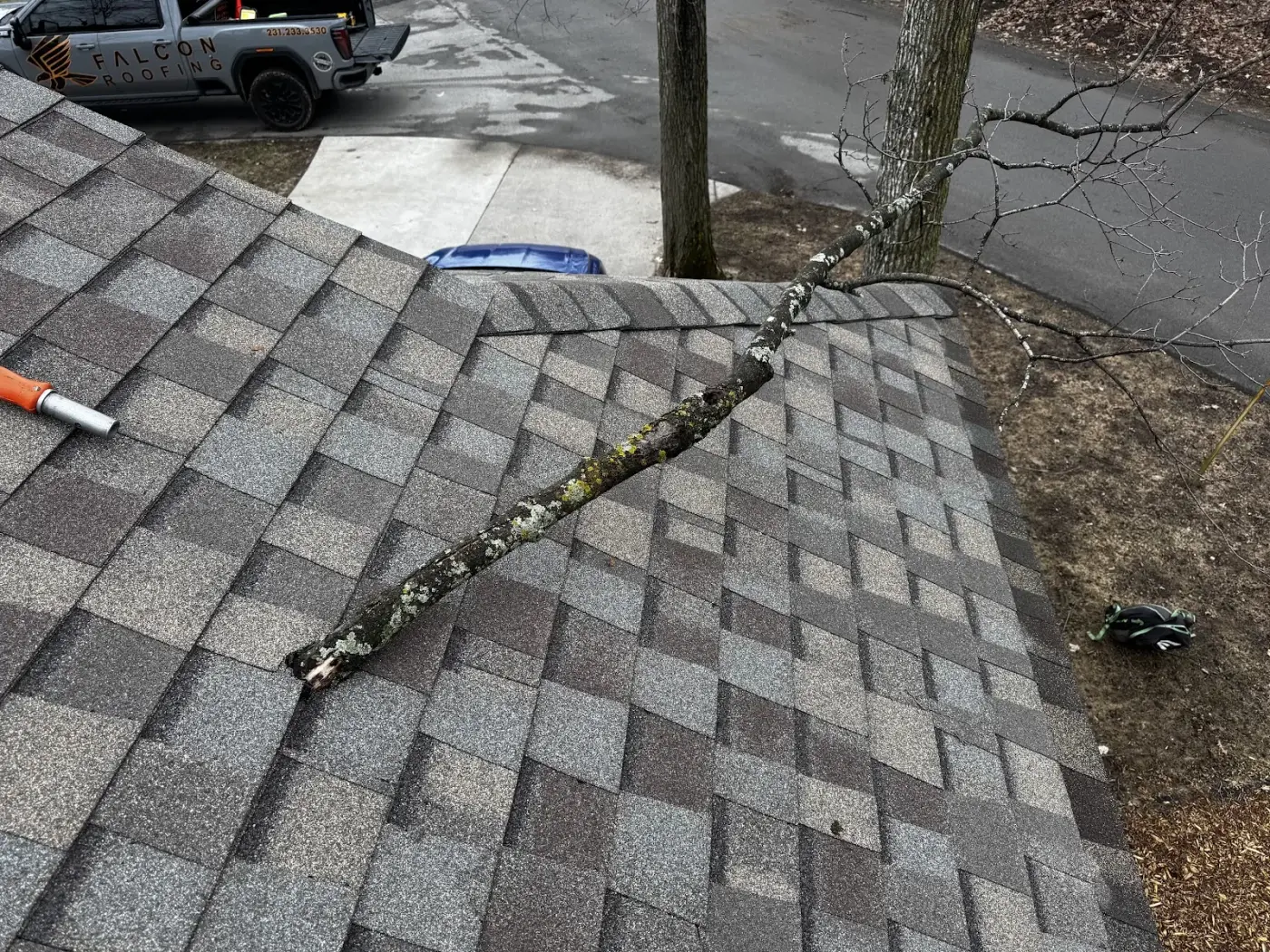
- Branch and debris damage, common after summer storms move through the wooded lots along M-22 and out on the Old Mission Peninsula
- Loose or missing flashing around chimneys, skylights, and valleys
- Bent or sagging gutters pulled away from the fascia by wind and heavy water
Check These Spots From the Ground (Safely)
Safety first: Please do not climb onto your roof after a storm. Wet, damaged roofing is slick and unstable, and walking on it can cause more damage than the storm did. A good pair of binoculars and a slow walk around the house will tell you most of what you need to know.
Walk the full perimeter of your home and check:
- The roof surface for missing, darkened, or lifted shingles
- Gutters and downspouts for piles of granules that look like coarse black sand
- The ground around your foundation for shingle pieces or washed-out granules
- Vents, the chimney, and skylights for bent metal or new gaps
- Siding, window screens, and your AC unit, because hail that dented those almost certainly reached your roof
Interior Warning Signs
Some storm damage announces itself inside the house first. After a storm, take a few minutes to check:
- Ceilings and upstairs walls for fresh water stains, yellowing, or discoloration
- Your attic for damp insulation, daylight coming through the roof boards, or a musty smell
- Top-floor light fixtures and vents for any sign of dripping
If water is already getting in, do not wait it out. Our guide on why your roof is leaking helps you trace the source, and it is worth acting the same day.
What to Do After You Spot Damage
Found something? Follow this order to protect both your home and your wallet:
- Document everything. Take dated photos from the ground of every damaged area, plus the dented gutters and any interior stains.
- Stop active leaks safely. If water is coming in, our emergency roof repair guide covers what you can do from inside to limit interior damage until a crew arrives.
- Call a licensed local roofer for an inspection. A professional gets on the roof safely and finds the bruises and lifted shingles you cannot see from the driveway.
- Start your insurance claim. Storm damage in Michigan is often covered. Our step-by-step guide to filing a roof insurance claim in Michigan walks through working with adjusters and avoiding common mistakes.
Watch out for storm chasers. After every big Northern Michigan storm, out-of-town crews go door to door offering fast, cheap repairs. Some are fine. Many collect a deposit, do quick work, and are three states away by the time the roof fails. A local company that will still be here next winter is worth far more than a bargain quote from a truck passing through.
Why Fast Action Matters Here
Our climate does not hand out much of a grace period. A cracked or bruised shingle lets in water. That water freezes, expands, and thaws over and over through our long winters, and the freeze-thaw cycle grows a small flaw into a real leak surprisingly fast. The sooner damage gets found and repaired, the less you spend fixing it.
If your roof already has some age on it, a storm can be the tipping point. It helps to know the 9 signs you need a new roof so you can tell the difference between a spot repair and a replacement.
Get Ahead of the Next Storm
The best time to find storm damage is before winter sets in. Two habits make a big difference:
- Book a professional inspection after any major hail or wind event, and at least twice a year. Here is how often you should inspect your roof.
- Keep up with seasonal upkeep. Our seasonal roofing checklist covers what to handle in each season, and our ice dam prevention tips matter once the snow starts.
Why Homeowners Trust Falcon Roofing After a Storm
Falcon Roofing has protected Northern Michigan homes for more than 20 years. Owner Seth Harris has spent over two decades in the roofing trade and is personally involved in every project, from the first inspection through the final walkthrough. Our crews have completed 2,500 or more roofing projects across Traverse City, Frankfort, Cadillac, and the surrounding communities, so we know exactly how local hail, wind, and lake-effect winters treat a roof.
We are fully licensed and insured, and we hold certifications from the manufacturers homeowners trust most:
- GAF Certified Installer
- CertainTeed Certified
- Owens Corning Preferred Contractor
- Firestone and Versico for flat and commercial systems
Those certifications let us stand behind your roof with some of the strongest manufacturer warranties in the industry, backed by a crew that lives and works in the same weather your roof has to survive.
Get a Free Storm Damage Inspection
If a storm just rolled through your area, get your roof checked before the damage spreads under the next snowfall. Falcon Roofing offers free, no-obligation storm damage inspections across Northern Michigan. We climb up safely, show you photos of what we find, explain your options in plain language, and help you decide the right next step.
Call 231-233-3530 or request your free estimate today.
Frequently Asked Questions
Does home insurance cover hail damage to a roof in Michigan?
In many cases, yes, as long as the damage came from a covered storm event and the claim is filed on time. Our Michigan roof insurance claim guide walks through the process.
How soon after a storm should I get my roof inspected?
Within a week or two if you suspect any damage, and always before winter closes in. Hidden hail damage gets much more expensive once snow and ice arrive.
Can I check for hail damage myself?
You can do a thorough check from the ground with a pair of binoculars using the steps above. Leave the on-roof inspection to a professional so nobody gets hurt and the damage does not get worse.
How much does storm damage repair cost in Northern Michigan?
It depends on the material and the extent of the damage. Our Traverse City roof cost guide gives current regional pricing ranges to help you plan.

About the author
Seth Harris | Owner, Falcon Roofing
Seth Harris is the owner of Falcon Roofing and has worked in the roofing industry for over 20 years. Born and raised in Northern Michigan, he knows firsthand what our climate does to a roof, from heavy snow and ice dams to the freeze-thaw cycles that wreck poorly installed systems. He is personally involved in every project, from the first inspection to the final walkthrough.
More about Seth →Have questions about your roof?
We're happy to help. Give us a call or request a free estimate online.