
Storm Damage Roof Repair in Northern Michigan: Costs & Next Steps
Northern Michigan storms do their worst when you are not looking. A summer afternoon on Grand Traverse Bay can turn into hail and straight-line winds in under an hour, and a winter system can load wet snow and ice onto a roof that already took a hit back in July. By the time you spot a stain on the ceiling, water has usually been getting in for a while.
This guide covers storm damage roof repair in Northern Michigan from the first warning signs through the final bill. You will see what the damage looks like, what repairs usually cost up here, how insurance fits in, and the steps to take the moment the weather clears. If you want to check your roof first, our guide on how to spot hail and storm damage walks through the signs you can see from the ground.
How Northern Michigan Weather Wears Down Roofs
Roofs up here take more punishment than roofs in most of the country. A few reasons why:
- Lake-effect snow. Areas around Traverse City, Gaylord, and Cadillac can see 80 to 150 or more inches of snow in a season. That weight stresses the structure and feeds ice dams at the eaves.
- Ice dams and freeze-thaw. Snow melts during a sunny afternoon, refreezes overnight, and pushes meltwater back up under the shingles. Water finds every weak seam.
- High winds. Gusts coming across open water and farmland lift, crease, and tear off shingles, especially on exposed lots near the bays and the lakeshore.
- Summer hail and thunderstorms. Hail bruises shingles and knocks the protective granules loose, which shortens the life of the roof even when the damage looks minor.
- Falling branches. Wet snow and high wind bring down limbs that puncture decking and crack shingles.
Because the damage usually starts small, a quick check after each big storm saves you money down the road.
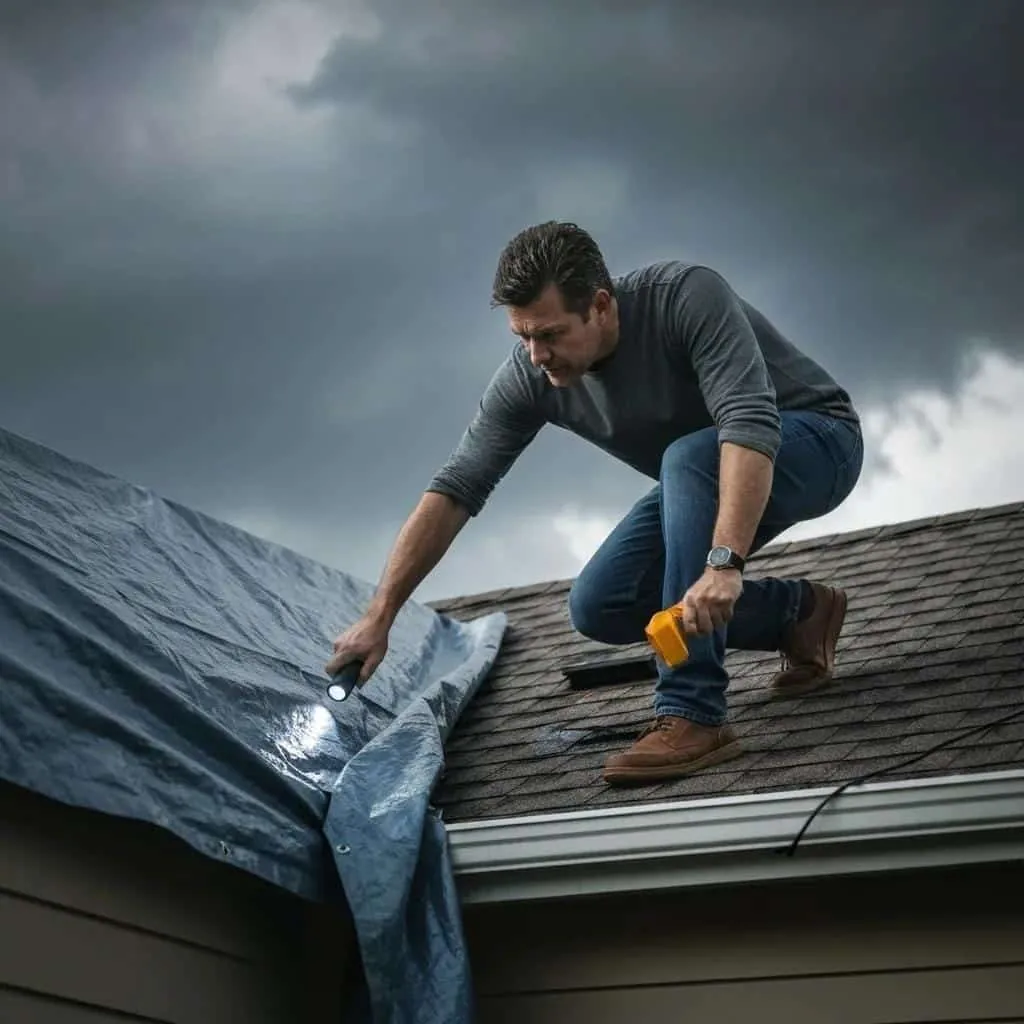 Emergency tarping keeps water out until the full repair can be scheduled. It is usually the first step after serious storm damage.
Signs Your Roof Took Storm Damage
Look for these from the ground, from an upstairs window, or from inside the attic. Climbing onto a wet or icy roof is dangerous, so leave the close-up inspection to a roofer.
- Shingles that are missing, curled, cracked, or lying in the yard
- Dark patches where the granules have washed away
- Dented gutters, flashing, or vents, which often points to hail
- Water stains on ceilings or on the attic rafters
- Daylight showing through the roof boards in the attic
- Sagging spots along the roofline
- Shingle grit collecting at the bottom of your downspouts
If you spot any of these, write down the date of the storm and take photos. That record helps with both the repair and any insurance claim. If water is already coming in, our guide on why your roof is leaking helps you trace the source.
A professional inspection turns up the bruised shingles and lifted flashing that are hard to see from the driveway.
What Storm Damage Roof Repair Costs in Northern Michigan
The price depends on the type of damage, the size of the affected area, your roofing material, and how steep the roof is. Here are the ranges we see most often for homes across the Grand Traverse region:
- Emergency tarping: $200 to $600 to cover an active leak and stop interior damage
- Minor repairs (a few shingles, a small flashing fix): $150 to $800
- Moderate repairs (larger shingle sections, chimney or vent flashing, a contained leak): $400 to $1,800
- Major repairs (wide sections, damaged decking, structural work): $1,500 to $7,000 and up
- Storm-related full replacement: $8,000 to $25,000 and up, depending on size and material
Treat these as planning numbers. Steeper roofs, metal panels, and hard-to-reach areas run higher. The only way to get a firm price is an on-site inspection. Keep in mind that many storm repairs are covered by insurance, so your real out-of-pocket cost can come down to just the deductible. For a fuller breakdown of local pricing, see our Traverse City roof cost guide.
Does Homeowners Insurance Cover It?
Most Michigan homeowners policies cover sudden storm damage from wind, hail, and fallen trees. Damage from age or general wear usually falls outside that coverage. A few things worth knowing before you file:
- Act within the claim window. Many policies ask you to report storm damage within a set period, often a year and sometimes less. Sooner is always better.
- Document everything. Photos, the storm date, and a written estimate from a local roofer all support your claim.
- Know your deductible. On many approved claims, you pay the deductible and insurance covers the balance of the repair.
- Have your own roofer at the inspection. A local contractor can meet the adjuster on site and make sure the full scope of damage gets counted.
Our step-by-step guide to filing a roof insurance claim in Michigan walks through working with adjusters and avoiding the common mistakes.
Watch Out for Storm Chasers
After a big storm, out-of-town crews show up going door to door. Some do fine work. Many do poor work and are long gone by the time a problem surfaces the next winter. Protect yourself:
- Be careful with anyone who pressures you to sign on the spot
- Ask for a local address along with Michigan licensing and insurance
- Read reviews from people in your own area
- Get the full scope and price in writing before any work starts
A roofer based here has to stand behind the work and face the same customers around town. Here is more on choosing a local company over a national chain or a passing crew.
What to Do First After a Storm
Work through these steps in order:
- Stay safe. Keep off the roof and away from any downed power lines. Check the attic and ceilings for leaks from inside.
- Contain the damage. Move furniture, set out buckets, and lay towels under active drips.
- Document it. Photograph the roof from the ground, the attic, any water stains, and debris in the yard. Note the storm date.
- Call a local roofer for an inspection. A pro finds the damage you cannot see and gives you a written estimate.
- Start your insurance claim. Use your photos and the estimate to file.
- Get emergency tarping if water is coming in. A tarp buys time until the full repair is scheduled. Our emergency roof repair guide covers what you can safely do from inside in the meantime.
Moving fast keeps a small repair from turning into rotted decking, mold, or a ruined ceiling.
Repair or Replace?
A targeted repair makes sense when the damage is limited and the roof still has good years left. A full replacement is often the better value when:
- A large part of the roof is damaged
- The roof was already near the end of its service life
- There is widespread hail damage across the whole surface
- You have had repeated leaks in several different spots
A good roofer will tell you which option costs less over the life of the roof, and insurance sometimes covers a full replacement when the storm damage is severe enough. If your roof already has some age on it, these 9 signs you need a new roof help you tell the difference.
Why Homeowners Trust Falcon Roofing After a Storm
Falcon Roofing has protected Northern Michigan homes for more than 20 years. Owner Seth Harris has spent over two decades in the trade and stays involved in every project, from the first inspection through the final walkthrough. Our crews have completed 2,500 or more roofing projects across Traverse City, Frankfort, Cadillac, Petoskey, Elk Rapids, and the surrounding communities, so we know exactly how local hail, wind, and lake-effect winters treat a roof.
We are fully licensed and insured, and we carry certifications from the manufacturers homeowners trust most, including GAF, CertainTeed, and Owens Corning. That lets us back your repair with strong manufacturer warranties and a crew that lives in the same weather your roof has to survive.
Get a Free Storm Damage Inspection
If a storm just moved through your area, get your roof checked before the damage spreads under the next snowfall. Falcon Roofing offers free, no-obligation storm damage inspections across Northern Michigan. We get up on the roof safely, show you photos of what we find, explain your options in plain language, and help you decide the right next step.
Call 231-233-3530 or request your free estimate today.
Frequently Asked Questions
How much does storm damage roof repair cost in Northern Michigan?
It depends on the material and how far the damage spreads. Minor repairs often run $150 to $800, moderate repairs $400 to $1,800, and major work more than that. Emergency tarping usually costs $200 to $600. An on-site inspection is the only way to get a firm number, and insurance often covers most of the bill.
Will my homeowners insurance cover storm damage?
In many cases, yes, as long as the damage came from a covered storm and you file on time. Wind, hail, and fallen-tree damage are commonly covered, while wear and age are not. Our Michigan roof insurance claim guide explains the process.
How soon should I repair storm damage?
As soon as you can, and always before winter sets in. Small cracks and bruises let in water that freezes, expands, and thaws through our long winters, which grows a minor flaw into a real leak fast.
Should I use a storm chaser or a local roofer?
Go local. Out-of-town crews collect a deposit and move on, while a local roofer has to stand behind the work and will be here when the next storm hits.

About the author
Seth Harris | Owner, Falcon Roofing
Seth Harris is the owner of Falcon Roofing and has worked in the roofing industry for over 20 years. Born and raised in Northern Michigan, he knows firsthand what our climate does to a roof, from heavy snow and ice dams to the freeze-thaw cycles that wreck poorly installed systems. He is personally involved in every project, from the first inspection to the final walkthrough.
More about Seth →Have questions about your roof?
We're happy to help. Give us a call or request a free estimate online.